 05 Nov, 2026
Which grade is best for stainless steel door hinges?
Grade 304 suits most homes and offices because it balances strength and rust resistance. Choose 316 near the coast or in constantly wet areas, and 202 only for dry indoor doors that see light use.
How many hinges does a door need?
Two hinges are fine for a light hollow door, but heavy timber or fire-rated doors should have three. The extra hinge spreads the load and stops sagging.
How can I tell a good hinge in the shop?
Weigh it, open and close it twenty times and look at the polish around the screw holes. A solid, smooth hinge with an even finish is usually well made.
Why Trust This Guide?
| Trust Signal | Details |
|---|---|
| Updated for 2026 | Reflects current choices made by builders, carpenters and dealers across India |
| Manufacturing Context | Written by a team working with 202, 304 and 316 stainless steel in Ghaziabad, Uttar Pradesh |
| Reference Sources | Hinge overview, World Stainless and Bureau of Indian Standards |
| Transparent Authorship | Prepared by Crown Industries, so we say openly where we have a stake |
Last Reviewed: November 2026
Introduction
Door hinges are the quietest working parts in a building. They carry the full weight of a door, swing thousands of times a year and rarely get a second thought. Then one day a door drags on the floor, a pin rusts into its knuckle or a leaf cracks near a screw hole, and suddenly everyone has an opinion about hinges.
Most door hinges fail because of choices made at the buying stage. Stainless steel is not one material but a family, and the grade printed on the quote matters more than the shine on the sample. This guide explains how stainless steel door hinges are made, how the common grades differ and how to match a hinge to a real door, so the choice you make today still works in ten years.
What Are Stainless Steel Door Hinges?
A hinge is a pivot made of two leaves joined by a pin, and in stainless steel the leaves are cut from sheet or strip, formed, drilled and polished. The finished piece resists rust because chromium in the alloy forms a thin protective layer on the surface. Read more about the metal itself on Wikipedia or the technical notes from World Stainless.
For most homes and shops, the two common types are the butt hinge, which folds flat when the door closes, and the welded hinge, where the knuckle is joined to the leaf by welding for extra strength. You can compare both on the stainless steel butt and welded hinges page.
Grade Comparison: 202 vs 304 vs 316
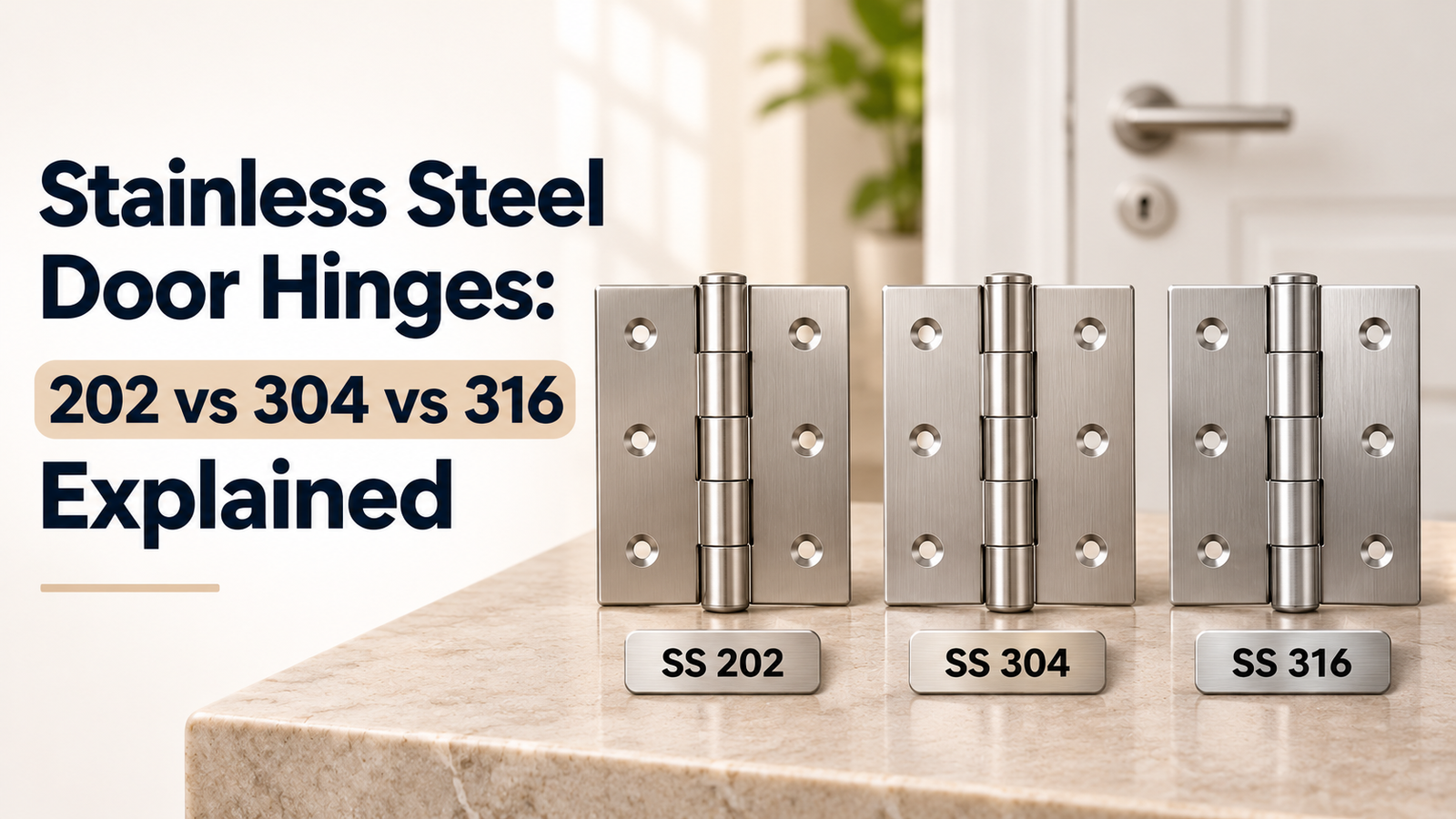
| Grade | Typical Character | Where It Fits | Watch Out For |
|---|---|---|---|
| 202 | Good strength, moderate corrosion resistance | Dry indoor doors, cupboards, light-duty use | Can stain in damp or coastal air |
| 304 | Strong, widely used, good resistance | Main doors, bathrooms, kitchens, most homes | Slightly less resistant to salt than 316 |
| 316 | Contains molybdenum for added resistance | Coastal homes, marine use, chemical or wet areas | Not needed for ordinary dry rooms |
| Mild steel (plated) | Strong but needs coating | Utility and industrial doors | Coating wear leads to rust |
The right grade for stainless steel door hinges depends on exposure. A bedroom door in Delhi and a balcony door in Mumbai face very different air, so they should not automatically get the same hinge.
How to Choose the Right Door Hinges
Match the Size to the Door Weight
A heavier door needs thicker leaves, a larger pin and usually three door hinges rather than two. As a simple rule, solid timber and fire-rated doors need heavier door hinges than hollow flush doors. If a hinge looks thin in your hand, it will look worse after a year of swinging.
Check the Pin and the Knuckle
The pin is where wear happens. A loose, rattling pin means the door will start to sag, while a pin that sits tight and rotates smoothly means the machining is accurate. Open and close the hinge twenty times in the shop before you buy.
Look at the Finish
A good polish is even and free of pits, especially around the screw holes and on the edges. Satin and mirror finishes both work, but a patchy finish suggests the grinding and polishing were rushed.
Think About the Door Frame
Timber frames, aluminium frames and steel frames take hinges differently. Make sure the screw size and hole spacing of the door hinges suit the frame, and use screws of the same metal to avoid staining. Stainless steel door accessories sold as a set usually keep screws, hinges and fittings consistent.
Butt Hinge vs Welded Hinge
| Feature | Butt Hinge | Welded Hinge |
|---|---|---|
| Construction | Leaves folded and joined around a pin | Knuckle welded to the leaf |
| Strength | Good for standard doors | Higher, suited to heavier doors |
| Look | Clean and neat when closed | Sturdy and slightly heavier appearance |
| Typical Use | Homes, offices, shops | Gates, industrial doors, heavy timber |
Either style of door hinges can be excellent when well made. Choose door hinges by the weight and use of the door, not by habit.
Common Mistakes with Door Hinges
- Using two door hinges on a heavy door and expecting them to last.
- Mixing steel screws with stainless steel door hinges, which can cause rust marks.
- Skipping a sample check and trusting a catalogue photo.
- Ignoring humidity when choosing the grade.
- Fitting door hinges slightly out of line, which strains the pin and frame.
Installation and Care in Simple Steps
- Mark the positions of the door hinges evenly, usually one near the top, one near the bottom and one in the middle for heavy doors.
- Cut shallow recesses so the leaves sit flush with the door edge.
- Fix with screws of the right length and the same metal.
- Check that the door swings freely and stays where you leave it.
- Once or twice a year, wipe the hinge and add a drop of light machine oil to the pin.
For the wider context of how door fittings are specified, see the overview of door furniture.
How Crown Industries Makes Door Hinges
Crown Industries produces stainless steel door hinges in grades 202, 304 and 316 at its Sahibabad unit in Ghaziabad. Cutting, grooving and polishing take place in-house, and each stage is inspected before the next one begins. Details of the process are on the quality control page, and you can see matching mortise locks and mortise handles alongside the hinges.
Dealers, carpenters and contractors who want to check sizes can request the catalogue through the contact page.
Expert Tip
Keep one hinge from your first delivery as a reference. For every later batch of door hinges, compare weight, thickness and finish against it, and reject anything that feels lighter or looks duller.
Reviewed By
Door hardware specialists with practical experience in metal fabrication, finishing and quality inspection. This content is reviewed periodically to match current standards and market practice.
Frequently Asked Questions (FAQs)
1. What is the difference between 304 and 316 stainless steel door hinges?
Grade 316 includes molybdenum, which improves resistance to salt and chemicals. Grade 304 is excellent for general use, so 316 is mainly worthwhile near the sea or in wet industrial areas.
2. Are 202 door hinges bad?
No. They are strong and suit dry indoor doors. They are simply less resistant to damp and salt, so avoid them in bathrooms and coastal homes.
3. Do stainless steel door hinges rust?
High-grade stainless steel resists rust well, but it is not immune. Poor grades, salt air and abrasive cleaning can still cause staining, so match the grade to the place.
4. What size hinge should I use for a standard door?
Most internal doors take hinges around four inches in length, while heavier or wider doors need larger sizes. Always check against the door weight and frame.
5. Can I replace one hinge on a sagging door?
You can, but replace all hinges on the door if they are worn, so the load is shared equally and the door hangs true.
6. How do I stop door hinges from squeaking?
Remove the pin, wipe away old grease, and add a drop of light machine oil. Avoid heavy grease, which attracts dust.
7. Should screws be the same metal as the hinge?
Yes. Using stainless steel screws with stainless steel door hinges avoids staining and weak spots.
8. What is a welded hinge used for?
A welded hinge has a knuckle welded to the leaf, which makes it stronger. It is used on gates, industrial doors and heavy timber.
9. Are door hinges ISI marked?
Some product categories follow Indian Standards and carry marking. Ask the supplier what applies to the specific hinge and verify on the BIS website.
10. Where can I see Crown Industries hinges?
Visit the hinge range or call the team to request the catalogue.
Conclusion
Good door hinges are an inexpensive part of a door, but they decide how it feels every day. Check the grade, the thickness, the pin and the finish, and match them to the weight of the door and the air around it.
If you want dependable stainless steel door hinges, explore the range from Crownisi, made in Ghaziabad and supplied across India. Call +91 98111 07515 or read more guides on our blog.