 29 Jun, 2026
 When you are choosing door hardware, it is easy to get overwhelmed. You walk into a store, and there are rows upon rows of hinges. Different sizes, different finishes, different materials. And if you are like most people, you probably just pick whatever looks good or whatever is cheapest.
But here is the truth: the material of your door hinge matters. A lot. It determines how long your hinge will last, whether it will rust, how smoothly your door will swing, and even how secure your home will be.
Two of the most popular choices for door hinges are SS 304 stainless steel butt hinges and brass hinges. Both are excellent materials. Both have their strengths. But they are very different.
If you are trying to decide between stainless steel butt hinges and brass hinges for your wooden doors, this guide will help you make the right choice. Let me break down the differences in simple, practical terms.
What Are SS 304 Stainless Steel Butt Hinges?
Let us start with stainless steel. SS 304 stainless steel butt hinges are made from grade 304 stainless steel. This material contains 18% chromium and 8% nickel. The chromium forms a thin, invisible layer on the surface that protects the metal from rust and corrosion.
Grade 304 is durable and corrosion resistant for most indoor and light outdoor environments . For a guide on stainless steel grades and material selection, visit Weber Knapp – Which Hinge Material Is Best for Your Design Project? .
A butt hinge is the traditional hinge with two rectangular leaves joined by a central pin. It fits into the gap between the door and its frame. You see them on wooden doors, metal doors, and heavy entry doors.
At Crown ISI , we manufacture SS 304 stainless steel butt hinges that are trusted by architects, builders, and homeowners across India. Our hinges undergo strict quality checks, including thickness tests, load tests, and salt spray tests. Every hinge is polished by hand and checked for weld strength. Our hinges are part of our complete range of stainless steel door accessories including SS door handles, cylinder door locks, aldrops, tower bolts, and more .
What Are Brass Hinges?
Brass hinges are made from brass, which is an alloy of copper and zinc. Copper gives it that warm golden color. Zinc adds strength. Together, they make a metal that is strong, beautiful, and resistant to rust.
Brass is what is called a non-ferrous metal. That means it has no iron in it. No iron means no rust. Ever. Brass hinges have been used on ships and in coastal areas for centuries because salt water does not hurt them.
At Crown ISI , we make Crown brass door fittings that meet ISI standards . Our brass hinges are available in polished, lacquer, and antique finishes. They are part of our classic door fittings accessories range.
SS 304 Stainless Steel vs Brass: The Key Differences
Now let us compare the two materials side by side.
1. Strength and Load Capacity
This is where stainless steel really shines. Stainless steel is significantly stronger than brass. It has very high mechanical strength and excellent resistance to deformation.
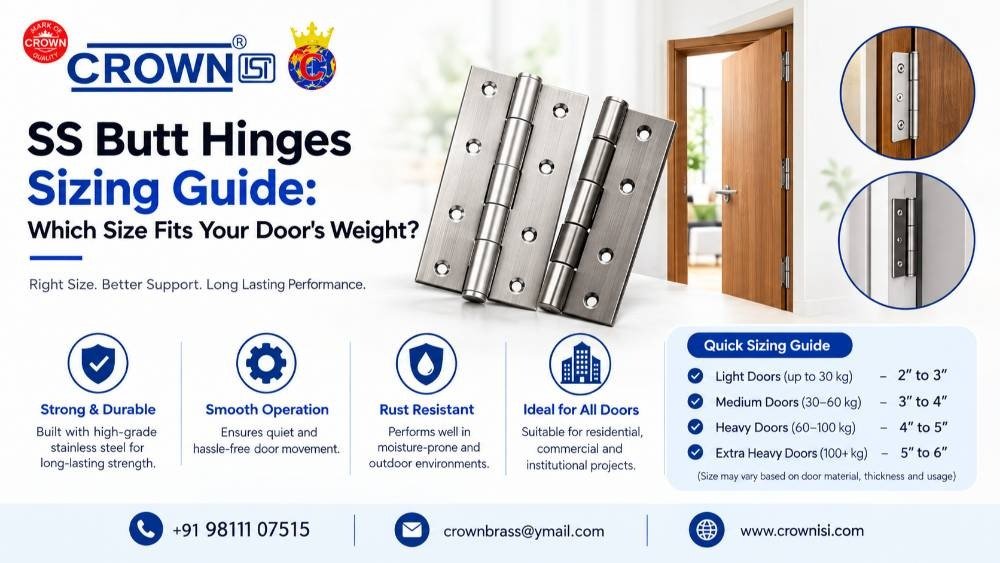
Stainless steel hinges are better suited for heavy doors and commercial use. They can handle medium to heavy doors without bending or sagging over time. This makes them ideal for main entrance doors, heavy wooden doors, and high-traffic areas.
Brass hinges are softer than stainless steel. They are typically used on lighter interior wooden doors. While brass is still strong and durable, it cannot support the same weight as stainless steel. For a detailed comparison of strength, cost, and applications, visit SDH Hardware – Stainless Steel vs Brass Door Hinges: What's the Difference? .
2. Corrosion Resistance
Both materials resist corrosion, but they do it differently.
Stainless steel has outstanding corrosion resistance. The chromium content forms a protective oxide layer that prevents rust and degradation, even in harsh environments. This makes stainless steel ideal for bathrooms, kitchens, coastal areas, and exterior doors.
Brass is naturally corrosion-resistant. It does not rust because it has no iron. However, over time, brass can oxidize and darken, especially in humid conditions. While some people like this aged patina look, others prefer to keep their brass shiny with regular cleaning.
For ultimate, worry-free durability in a pure material form, especially in coastal areas or homes with aggressive water, high-grade stainless steel (304) is arguably the superior choice . For a comparison of corrosion resistance and cost, visit Sateer Hardware – Stainless Steel vs Brass for Shower Door Hinges .
3. Aesthetic Appeal
This is where brass wins hands down.
Brass hinges have a warm, golden color that people love. They look rich and traditional. Brass adds character to any door or cabinet. You can polish brass to keep it shiny, or let it develop a patina over time for that aged, vintage look.
Stainless steel hinges have a clean, modern look. They come in satin (brushed, non-reflective) or mirror (highly polished) finishes. Stainless steel complements contemporary and minimalist interiors. But it does not have the warmth or character of brass.
4. Maintenance
Stainless steel hinges require very little maintenance. A simple wipe with a damp cloth removes surface dirt. For tougher grime, use a mixture of vinegar and water. Occasional lubrication keeps the moving parts operating smoothly. Quality stainless steel hinges can last 20-30 years or more with proper installation and minimal maintenance.
Brass hinges may require more maintenance than stainless steel hinges to keep them looking their best . For information on hinge durability and maintenance, visit Tallsen – Top 10 Door Hinges for High-Traffic Areas .
5. Cost
Stainless steel is generally more expensive than brass. However, it is also much stronger and more durable. While the upfront cost may be higher, the long lifespan and low maintenance requirements make stainless steel a cost-effective choice in the long run.
Brass can vary in price. Solid brass hinges are typically more expensive than plated brass. The protective finish on plated brass can eventually wear through, exposing the base metal to potential tarnishing. High-quality solid brass hinges are an investment, but they can last for generations.
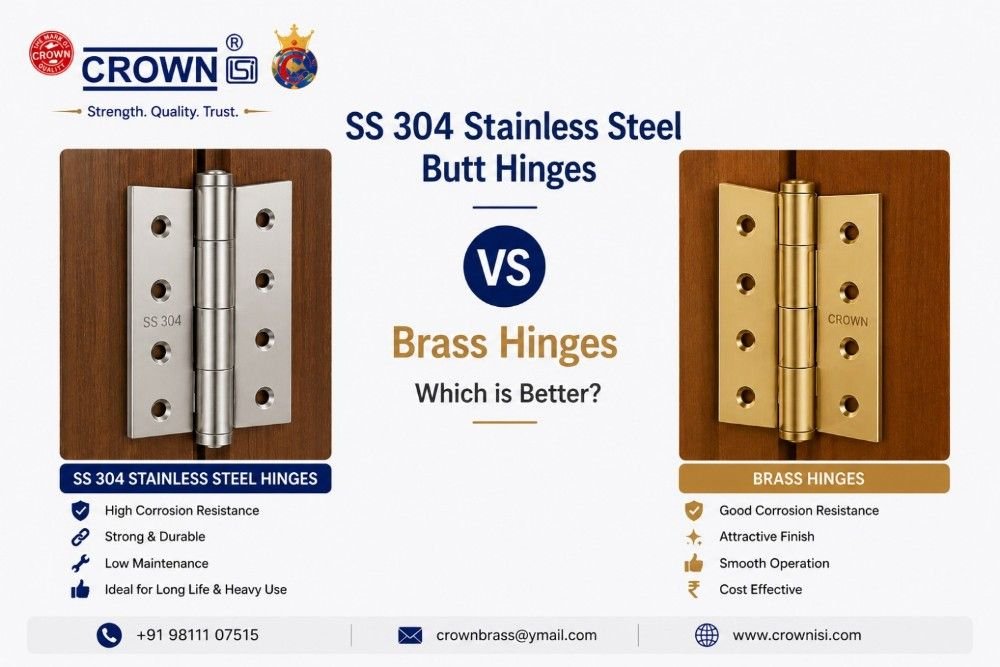
Quick Comparison Table
Here is a clear side-by-side comparison:
| Feature | SS 304 Stainless Steel Butt Hinges | Brass Hinges |
|---|---|---|
| Material Composition | 18% chromium, 8% nickel | Copper-zinc alloy |
| Strength | Very high | Moderate |
| Corrosion Resistance | Excellent | Good, but can oxidize over time |
| Best For | Heavy doors, outdoor, humid areas | Light interior doors, decorative applications |
| Aesthetic | Clean, modern look | Warm, golden, traditional look |
| Maintenance | Low | Moderate (if keeping shiny) |
| Rust | No | No (non-ferrous) |
| Lifespan | 15+ years | Decades |
| ISI Mark Available | Yes (304G) | Yes (IS 205:1992) |
Which One Should You Choose?
The answer depends on your specific needs.
Choose SS 304 Stainless Steel Butt Hinges If:
- You need hinges for heavy doors like main entrance doors or commercial doors
- Your doors are in humid or coastal areas
- You want low maintenance hinges that will last for years without rusting
- You prefer a clean, modern look
- You want the strength and durability of stainless steel
- You are looking for stainless steel butt hinges that are ISI certified
Choose Brass Hinges If:
- You have light interior wooden doors
- You want a warm, traditional, classic look
- You appreciate the beauty of brass and its golden color
- You do not mind occasional cleaning to keep the shine
- You want hinges that never rust because they have no iron
- You are looking for Crown brass door fittings that are ISI certified
What About Welded Hinges?
If you are choosing stainless steel hinges for a main door or security door, consider stainless steel welded hinges .
Stainless steel welded hinges have the hinge pin welded into one leaf. It cannot be removed. This stops thieves from pulling out the pin and removing the door. It also keeps the hinge tight for many years.
At Crown ISI, we offer both welded and non-welded SS Butt Hinges. For main doors, always choose welded.
ISI Standards – Why They Matter
In India, ISI mark certification ensures that the product meets Indian standards for quality and safety.
For brass hinges, the standard is IS 205:1992. This standard covers material composition, dimensions and tolerances, surface finish, strength requirements, and testing methods.
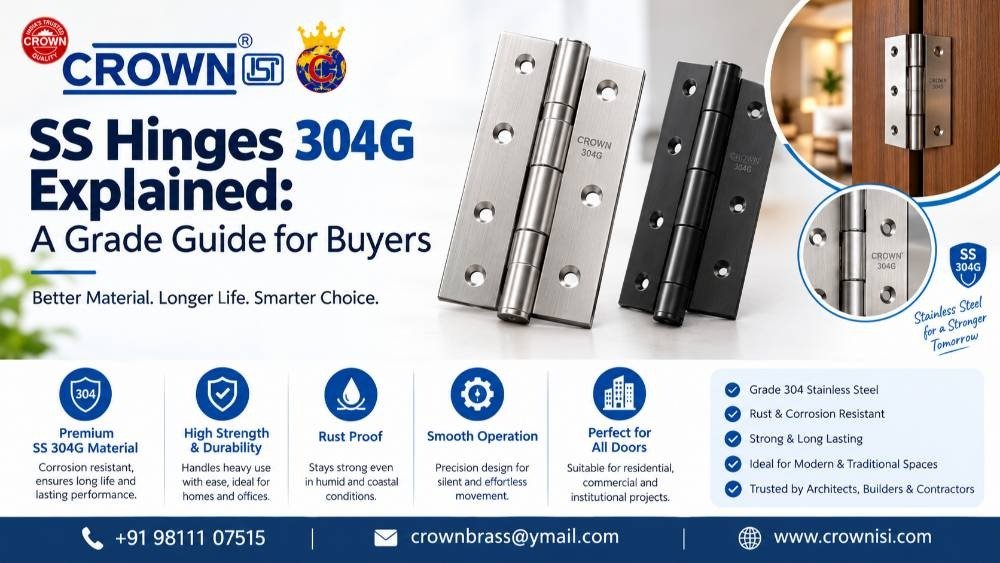
For stainless steel hinges, look for 304G or SS 304 engraved on the hinge. A genuine hinge will have "SS 304" or "304G" engraved. If you see no mark, do not buy.
For industry standards on butt hinge sizes and specifications, visit ASSA ABLOY – Butt Hinge Standards .
At Crown ISI , we manufacture both SS 304 stainless steel butt hinges and brass hinges that meet ISI standards. You can trust the quality.
A Note on Finishes
Both stainless steel and brass hinges come in different finishes.
Stainless steel finishes:
- Satin finish – brushed, non-reflective, hides fingerprints
- Mirror finish – highly polished, reflective
Brass finishes:
- Polished brass – bright, shiny, golden
- Lacquered brass – clear coating to prevent tarnishing
- Antique brass – aged, vintage look
Choose a finish that matches your other door hardware like handles, locks, and tower bolts.
Frequently Asked Questions (FAQs)
1. Which is stronger – SS 304 stainless steel or brass?
SS 304 stainless steel is significantly stronger than brass. It has very high mechanical strength and excellent resistance to deformation. Stainless steel hinges can support heavy doors, while brass hinges are better suited for lighter interior doors.
2. Do brass hinges rust?
No. Brass is a non-ferrous metal, which means it has no iron in it. No iron means no rust. Ever. Brass hinges have been used on ships and in coastal areas for centuries because salt water does not hurt them.
3. Do stainless steel hinges rust?
SS 304 stainless steel contains chromium, which forms a protective oxide layer that prevents rust. It does not rust easily, even in humid or coastal areas. However, lower grades like SS 202 or SS 201 may rust over time.
4. Which is more expensive – stainless steel or brass?
Stainless steel is generally more expensive than brass. However, it is also much stronger and more durable. Solid brass hinges are also expensive, especially high-quality ones. The long lifespan of both materials makes them cost-effective investments.
5. Which hinge is better for exterior doors?
SS 304 stainless steel is better for exterior doors because of its superior strength and corrosion resistance. It can handle harsh weather conditions without rusting or degrading. Brass can also be used on exterior doors, but it may oxidize and darken over time.
6. Which hinge is better for interior doors?
Both are good for interior doors. Brass is popular for its warm, traditional look. Stainless steel is popular for its clean, modern look and durability. The choice depends on your style preference and the weight of your door.
7. How do I know if a hinge is genuine SS 304?
A genuine SS 304 stainless steel butt hinge will have "SS 304" or "304G" engraved on it. If you see no mark, do not buy. Always ask your supplier for the grade certificate.
8. What is the ISI mark, and why is it important?
The ISI mark is a certification from the Bureau of Indian Standards that ensures the product meets Indian quality and safety standards. For brass hinges, the standard is IS 205:1992. For stainless steel hinges, look for 304G. ISI mark guarantees you are getting a quality product.
9. Can I use stainless steel hinges on a wooden door?
Yes. Stainless steel hinges work perfectly on wooden doors. They are strong enough to support heavy wooden doors and will not rust over time. Make sure to use the right size and thickness for your door.
10. Why should I choose Crown stainless steel door fittings?
Crown has been manufacturing high-quality door fittings for over 39 years. Our products are trusted by government departments and public sector organizations across India. We use only genuine SS 304 for all our Stainless Steel Hinges. Every hinge is polished by hand, checked for weld strength, and tested for rust resistance. Crown has a nationwide marketing network and a dedicated quality control process.
Final Thoughts
Choosing between SS 304 stainless steel butt hinges and brass hinges comes down to your specific needs.
If you need strength, durability, and low maintenance for heavy doors or outdoor applications, choose SS 304 stainless steel.
If you want beauty, warmth, and a traditional look for interior doors, choose brass.
Both are excellent materials. Both will last for decades if you choose quality products. And both are available with ISI certification from Crown.
If you are looking for stainless steel butt hinges , SS butt hinges , or Crown brass door fittings , look no further than Crown ISI. With over 39 years of experience, a nationwide marketing network, and a commitment to quality that is second to none, Crown is the name you can trust.
Visit our products page to explore our full range of stainless steel butt hinges and brass hinges. For our complete range of door accessories, check out our stainless steel door accessories page.
Contact us today for more information or to place your order.
Contact Information
Crown Industries
Factory: 39/2/9A, Site IV, Industrial Area, Sahibabad, Distt. Ghaziabad (U.P.)
Office: 500
Kuchha Pati Ram, Bazar Sita Ram, Delhi 110006
Phone: +91 98111 07515