 16 Mar, 2026
 A few years ago, a friend of mine built his dream home near Alibaug. Beautiful place. Sea-facing. Teak wood doors everywhere. He spent a fortune on the wood, the handles, the locks.
Six months later, he called me frustrated. The doors were sagging. The hinges had rust spots. They squeaked every time someone walked in.
I went to see the place. One look at the hinges told me the problem. Cheap mild steel with a chrome coating. The salty sea air had eaten through the coating. Rust was spreading under the paint. The pins were wearing out. The doors were slowly dying.
If he had spent a little more on SS 304 Stainless Steel Butt Hinges, he would never have had that problem. The doors would still be perfect today.
This is the reality. Hinges are small, but they carry the weight of your doors. If you choose the wrong ones, you pay for it again and again. If you choose the right ones, you forget they exist.
At Crown ISI, we make SS Butt Hinges that actually last in Indian conditions. Hot summers, wet monsoons, salty coastal air—our hardware handles it all. Let me walk you through everything you need to know about SS 304 butt hinges, without the technical headache.
What Are SS 304 Stainless Steel Butt Hinges?
Let us start with the basics.
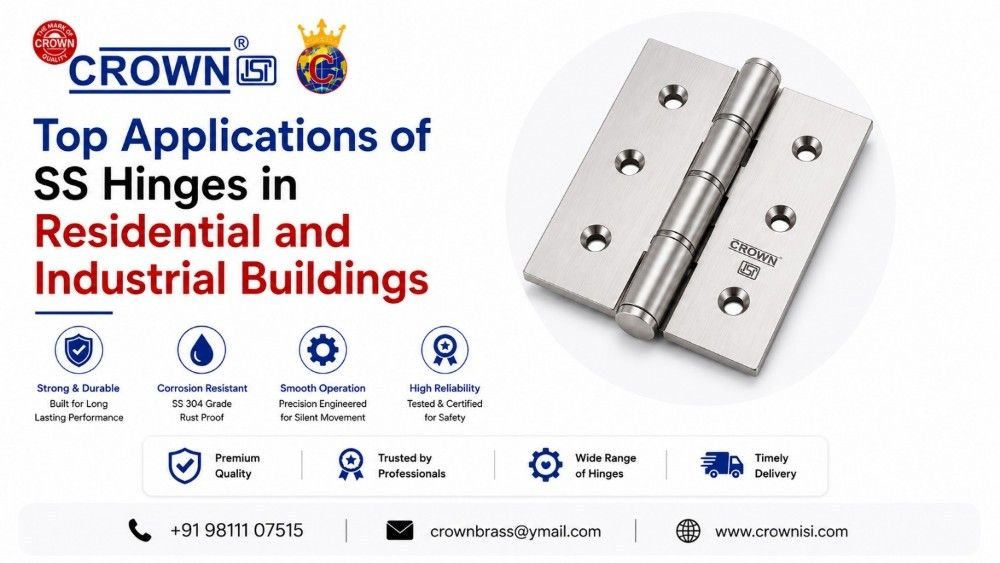
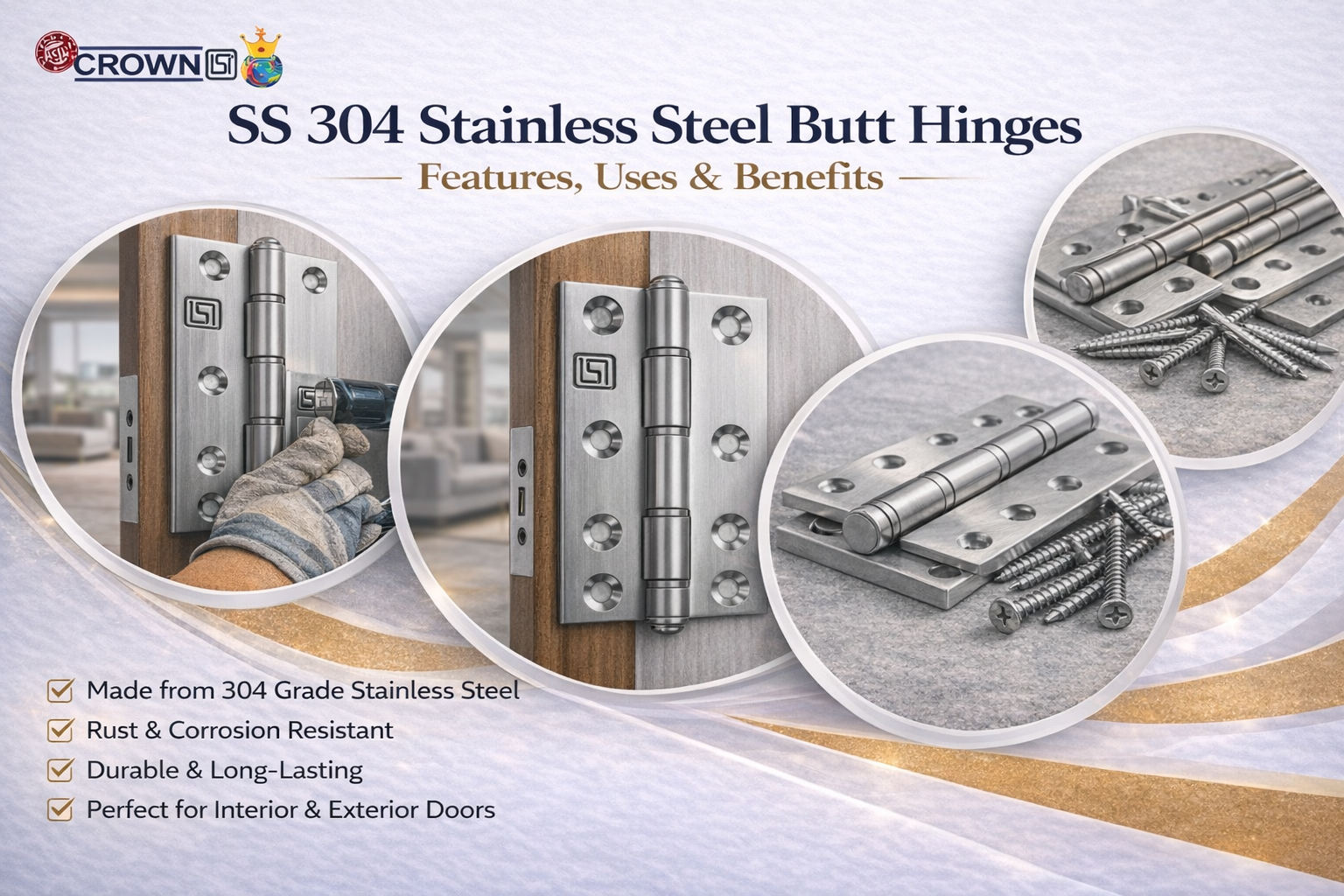
A butt hinge is the classic hinge you see on most doors. Two flat metal plates (called leaves) joined by a pin in the middle. One leaf screws into the door. The other screws into the frame. When the door opens, the leaves rotate around the pin.
Now, the "SS 304" part is where the magic happens.
Stainless steel comes in different grades. 304 is the good one. It has 18% chromium and 8% nickel . The chromium forms a protective layer on the surface. If the steel gets scratched, that layer heals itself. That is what stops rust.
Lower grades like 201 or 202 save money by using less nickel. They look similar in the shop. But put them in a humid bathroom or an outdoor gate, and within a year, those brown spots start showing up.
SS 304 Stainless Steel Butt Hinges do not do that. They are built for the long haul.
Key Features You Need to Know
When you are shopping for SS Butt Hinges, here are the features that actually matter.
1. Material Grade
Always look for 304 grade. Some hinges say "stainless steel" but are actually 201 or 202. Ask the seller. Check the packaging. If it does not say 304, be careful.
2. Thickness
Hinges come in different thicknesses, measured in millimeters or gauge. A 3mm thick hinge is much stronger than a 1.6mm hinge . For heavy doors, thickness matters. Do not go too thin.
3. Pin Type
The pin holds everything together. Some pins are removable, some are fixed. Removable pins let you take the door off easily for maintenance or moving furniture. Fixed pins are cheaper but less convenient.
Some hinges have ball bearings inside the knuckles . These bearings make the hinge move smoothly even under heavy weight. If you have a heavy door, ball bearing hinges are worth the extra money.
4. Knuckle Design
The knuckles are the round parts where the pin goes through. More knuckles mean more strength. A standard hinge has three knuckles on one leaf and two on the other. Heavy duty ones might have more.
5. Finish
SS 304 hinges come in different finishes. Matt, satin, polished. Satin finishes are popular because they do not show fingerprints. For modern homes, satin stainless steel looks clean and understated.
Uses: Where to Use SS 304 Butt Hinges
SS Door fitting 304G is versatile. Here is where you should use it.
Internal Wooden Doors
This is the most common use. Bedrooms, living rooms, study rooms. A standard 4-inch or 5-inch SS 304 butt hinge with three hinges per door is perfect. It handles the daily opening and closing without wearing out.
Main Doors
Main doors are heavy. They get used dozens of times a day. They face dust, rain, and sometimes direct sun. For main doors, use 6-inch heavy duty SS butt hinges. Thicker material, stronger pins, ball bearings if possible . Use three hinges, not two.
Bathroom Doors
Bathrooms are humid. Steam, water splashes, moisture in the air. Cheap hinges rust here fast. SS 304 is the right choice. It laughs at humidity. No rust, no corrosion, no problems.
Kitchen Doors and Cabinets
Kitchens have grease, moisture, and constant movement. SS 304 hinges handle it easily. For kitchen cabinets, you might use smaller butt hinges or specialized concealed hinges, but for the kitchen door, standard SS butt hinges work fine.
Office and Commercial Spaces
Offices need hardware that lasts. Doors open and close hundreds of times a day. SS 304 butt hinges with ball bearings are tested to handle 200,000 cycles or more . That is years of use without failure.
Fire Rated Doors
Some SS 304 butt hinges are fire rated . They are tested to withstand fire for up to four hours. If you have fire doors in your building, you need fire rated hinges. Check the specifications.
Benefits of Choosing SS 304 Butt Hinges
Why go through the trouble of finding good SS 304 hinges? Here is what you get.
1. No Rust
This is the big one. SS 304 does not rust. Period. In coastal areas, in bathrooms, in rainy climates—it stays clean. The chromium oxide layer protects the metal . You do not have to paint it or oil it.
2. Long Life
SS 304 hinges last for decades. They do not corrode. They do not weaken. The pins do not wear out quickly. Install them once and forget them.
3. Strength
SS 304 is strong. It handles heavy doors without bending. A good SS butt hinge with 3mm thickness can support doors up to 120kg . That is plenty for any residential door.
4. Low Maintenance
You do not need to oil SS 304. You do not need to paint it. Just wipe it with a damp cloth now and then. That is it. For busy homeowners, this is a blessing.
5. Looks Good
Stainless steel has a clean, modern look. It matches any door color, any interior style. Satin finishes hide smudges. Polished finishes shine. You have options.
6. Fire Resistance
SS 304 does not burn. It does not weaken at high temperatures the way some other materials do. If safety matters to you, this is important.
Size Guide: Which Hinge Do You Need?
Choosing the right size is simple if you follow this table.
|
Door Type |
Recommended Size |
Thickness |
Number of Hinges |
|
Light internal door (bedroom, study) |
3 inch or 4 inch |
2.5mm to 3mm |
3 |
|
Standard internal door |
4 inch or 5 inch |
3mm |
3 |
|
Heavy main door |
5 inch or 6 inch |
3mm to 4mm |
3 |
|
Bathroom door |
4 inch |
3mm |
3 |
|
Cupboard door |
3 inch |
2mm to 2.5mm |
2 |
For very heavy doors, consider ball bearing hinges. They handle weight better and move more smoothly .
Installation Tips That Matter
Even the best hinge fails if installed badly. Here is how to do it right.
Mortise the Hinge
Do not just screw the hinge onto the surface of the door. Cut a shallow recess so the hinge sits flush with the wood. This is called mortising. It looks professional and transfers the weight to the wood, not just the screws.
Use Three Hinges
I keep saying this because it matters. Two hinges might hold a lightweight door for a while. But three hinges distribute the weight evenly. The door stays aligned. No sagging.
Check the Screws
Use the screws that come with the hinge. They are the right length. If you use a screw that is too long, it might poke through the door. Too short, and it will not hold.
Align Carefully
When you hang the door, close it slowly. Check the gap around the door. It should be even—about 2 to 3 millimeters. If the gap is uneven, adjust by bending the hinge slightly or adding thin packing behind it.
Lubricate the Pin
Before you hammer the pin in, rub a pencil lead on it. Graphite is a dry lubricant. It keeps the hinge moving smoothly without attracting dust. Do not use oil.
Why Crown ISI?
Look, I know there are cheaper options in the market. Imported hinges from China. Local ones made from recycled steel. They look similar in the store. The difference shows up after six months.
Crown ISI has been making hardware for Indian homes for a long time. We know our weather. We know our dust. We know our humidity. Our SS Butt Hinges are made from genuine 304 grade steel. The thickness is consistent. The pins are strong. The finishes hold up.
When you buy from Crown ISI, you are not just buying a hinge. You are buying the guarantee that your doors will work smoothly for years. No rust. No sag. No squeak.
Our SS Door fitting 304G range includes everything you need—butt hinges, tower bolts, handles, and more. All made with the same attention to quality.
Maintenance: Keep Them Moving
SS 304 hinges are low maintenance, but they like a little attention.
- Wipe them clean: Dust and grime build up over time. A damp cloth every few months keeps them looking new.
- Tighten screws: Check once a year. A loose screw makes the door wobble and wears out the hinge.
- Listen for squeaks: If you hear a squeak, it is usually the pin rubbing. Rub a pencil lead on the pin. Graphite fixes it instantly.
Do not use cooking oil or thick grease. That stuff collects dust and turns into paste. Stick to dry lubricants like graphite.
Final Thoughts
Hinges are small. Easy to overlook. But they carry the weight of every door in your house. If the hinges fail, the door fails. The lock misaligns. The handle scrapes. Everything goes wrong.
Do not gamble on cheap hardware. Spend a little extra. Buy SS 304 Stainless Steel Butt Hinges from Crown ISI. Install them properly. And then forget about them for the next twenty years.
That is what quality feels like. You do not notice it. It just works.
Frequently Asked Questions
1. What is the difference between SS304 and other stainless steel grades?
SS304 has 18% chromium and 8% nickel, which gives it excellent rust resistance. Lower grades like 201 or 202 use less nickel. They are cheaper but more likely to rust over time .
2. Are SS Butt Hinges strong enough for heavy wooden doors?
Yes, if you choose the right size. For heavy doors, use 5-inch or 6-inch hinges with 3mm thickness. Use three hinges per door. Ball bearing hinges are even better for heavy doors .
3. Will SS 304 hinges rust in the bathroom?
No. SS 304 is perfect for bathrooms. It handles moisture and humidity without rusting. That is one of its main advantages over cheaper steel .
4. How many hinges do I need for a standard door?
Always use three hinges for a standard door. Two might hold temporarily, but three distribute the weight evenly and prevent sagging over time.
5. What size hinge do I need for my bedroom door?
Most bedroom doors take 4-inch or 5-inch hinges. Measure the existing hinge if you are replacing old ones. When in doubt, 4-inch is safe for standard internal doors.
6. Do I need ball bearing hinges?
For standard doors, regular SS butt hinges are fine. For heavy doors, or doors that get used constantly, ball bearing hinges are worth the extra cost. They move more smoothly and last longer .
7. Can I use SS 304 hinges outdoors?
Yes. SS 304 is excellent for outdoor use. It resists rain, sun, and salt air. For gates, consider welded hinges instead of butt hinges, but if you are using butt hinges outdoors, SS 304 is the right choice.
8. How do I stop my hinge from squeaking?
Rub a pencil lead on the hinge pin. The graphite acts as a dry lubricant. If that does not work, remove the pin, clean it, and apply a little graphite powder. Do not use oil.
9. Are Crown ISI hinges made in India?
Yes. Crown ISI is manufactured by Mohan Metal Industries in Delhi, a company with decades of experience in the Indian hardware market. Our products are made in India for Indian conditions.
10. Do you offer a warranty on SS Butt Hinges?
Yes, Crown ISI provides a warranty against manufacturing defects. Keep your bill safe. If a hinge fails due to a material flaw, we replace it. Normal wear and tear over many years is not covered, but our hinges are built to last.