 10 Oct, 2026
What is the short answer on mortise lock?
A mortise lock fits inside a pocket cut into the edge of the door, which makes it stronger and neater than surface-mounted locks. It combines a latch and a deadbolt in one body and works with a mortise handle and cylinder.
Where can I find mortise locks in Delhi NCR?
Crownisi in Sahibabad, Ghaziabad manufactures mortise locks with in-house cutting, polishing and finishing, and checks quality from raw material to final packing. Call 98111 07515 or send a message to request the catalogue.
Why Trust This Guide?
| Trust Signal | Details |
|---|---|
| Updated for 2026 | Reviewed against current product ranges and material grades |
| Manufacturer Experience | Written with input from a manufacturer with about 34 years in door accessories |
| Local Expertise | Based on Sahibabad, Ghaziabad and Delhi NCR supply and fitting practice |
| Industry References | Britannica lock reference, Bureau of Indian Standards, Wikipedia mortise lock page |
| Review Methodology | Transparent evaluation factors explained below |
This guide on mortise lock draws on manufacturing practice, material standards and everyday fitting experience. Each point has been checked for accuracy, practicality and relevance for buyers, dealers and builders. Information may change as products and standards are updated.
Last Reviewed: October 2026
How We Evaluated Mortise Locks
| Factor | Weight |
|---|---|
| Material Quality and Grade | 25% |
| Finish and Workmanship | 20% |
| Fit and Compatibility | 20% |
| Durability in Daily Use | 20% |
| Supplier Testing and Support | 15% |
Introduction
A mortise lock is one of the oldest and most trusted lock designs. You will find it on main doors, office doors and hotel rooms because it offers strength, a clean look and long working life. This guide explains how a mortise lock works, what it contains and how to choose one that suits your door.
What Is a Mortise Lock?
A mortise lock sits inside a rectangular cavity, called a mortise, cut into the edge of the door. The Wikipedia article on the mortise lock gives a good technical background. Compared with a tubular lock, its body is larger and holds more internal parts, so it is naturally sturdier.
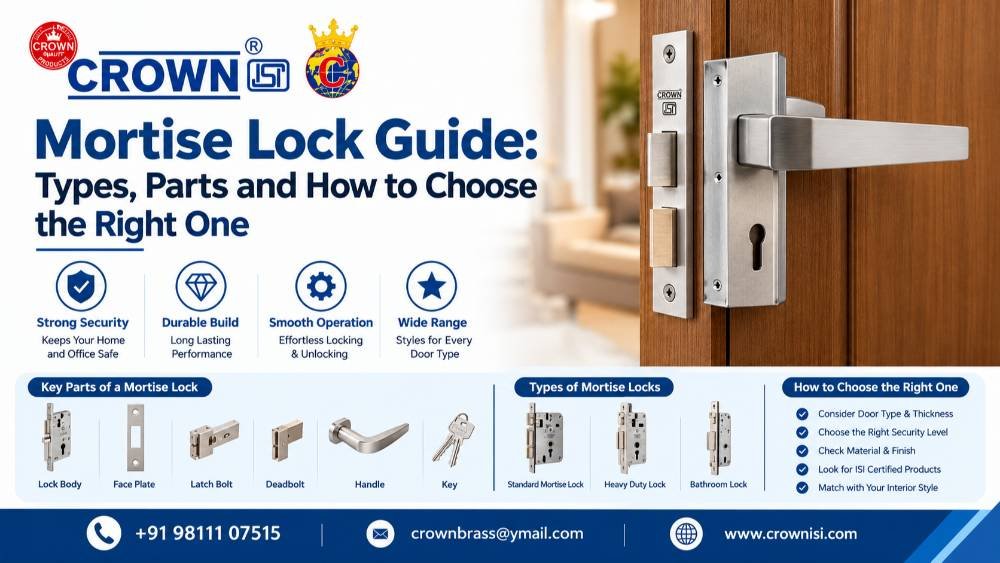
Parts of a Mortise Lock
| Part | Function |
|---|---|
| Lock case | Metal box that holds all parts |
| Latch bolt | Spring bolt that holds the door closed |
| Deadbolt | Solid bolt thrown by the key for extra security |
| Faceplate | Visible plate on the door edge |
| Strike plate | Fitted to the frame to receive the bolts |
| Cylinder | Takes the key and operates the deadbolt |
| Spindle | Links the handles to the latch |
Types of Mortise Lock
- Sashlock: Has a latch and a deadbolt, ideal for main doors.
- Deadlock: Has a deadbolt only and no handle action.
- Bathroom lock: Has a thumb turn and indicator for privacy.
- Latch only: Used on internal doors that need no locking.
Each type works with a matching mortise handle, so pick both together for a smooth fit.
Why Choose a Mortise Lock?
- Strength: The body sits inside the door, protected from tampering.
- Security: A lock with a deadbolt resists forced entry well.
- Appearance: Little hardware shows, giving a tidy look.
- Lifespan: Metal internals handle years of daily use.
- Flexibility: Works with many handle and cylinder styles.
Crownisi supplies a full range of mortise locks made in tested materials for homes, offices and projects.
How to Choose the Right Mortise Lock
- Door thickness. The door must be thick enough to hold the lock body safely.
- Backset. Measure from the door edge to the centre of the handle spindle.
- Material. Brass suits classic doors, while stainless steel suits damp areas.
- Function. Decide whether you need a latch, deadbolt or both.
- Finish. Match the lock to your handles and hinges.
Basic Fitting Steps
- Mark the lock position on the door edge.
- Cut the mortise to the lock case size using a chisel or router.
- Slide in the lock body and screw the faceplate.
- Fit the cylinder and spindle, then the handles.
- Mark and cut the strike plate position on the frame.
For heavy fittings, a professional carpenter gives the cleanest result.
Care and Maintenance
Clean the faceplate with a dry cloth, apply a graphite-based lubricant to the keyway once or twice a year and tighten loose screws. Avoid oil on the cylinder, as it attracts dust.
Trusted Sources and Further Reading
For lock history and design, see the Britannica article on locks and standards information from the Bureau of Indian Standards. You may also like our guide to door handles for mortise locks and the full stainless steel butt and welded hinges range.
Expert Tip
Measure the backset and door thickness before you choose a mortise lock. A lock body that is too big for the door weakens the door edge, so a skilled carpenter should cut the mortise cleanly and to size.
Reviewed By
Manufacturing and product specialists with practical experience in mortise locks, material selection and quality control. This content is reviewed periodically to reflect current best practices and product information.
Frequently Asked Questions (FAQs)
1. What is a mortise lock?
It is a lock that fits into a pocket cut in the door edge and combines a latch with a deadbolt.
2. Is a mortise lock more secure than a normal lock?
Generally yes. The larger metal body and deadbolt make it harder to force.
3. Can I fit a mortise lock on any door?
It suits wooden doors thick enough to take the lock case. Thin doors may need a different lock style.
4. What is backset in a mortise lock?
It is the distance from the door edge to the centre of the spindle hole.
5. Which material is best for a mortise lock?
Brass and stainless steel are popular. Pick by environment and style.
6. Does a mortise lock need a special handle?
It works with lever or knob handles made for mortise fitting.
7. How long does a mortise lock last?
With good care, many last for decades.
8. Can a mortise lock be fitted in an existing door?
Yes, but the door must be cut to size, so a skilled carpenter is advised.
9. How do I stop my mortise lock from sticking?
Check alignment of the strike plate, tighten screws and lubricate the keyway.
10. Where can I buy a mortise lock?
Choose an ISI-certified manufacturer such as Crownisi through the contact page.
Conclusion
A well-chosen mortise lock gives lasting security with a neat finish. Check backset, material and function before buying, and pair it with matching hardware from Crownisi.
Ready to choose the right fittings? Explore Mortise Locks or contact Crownisi to discuss your requirement and request the catalogue today.