 08 Nov, 2026
What is a mortise lock?
A mortise lock is a lock body fitted into a pocket cut into the edge of a door. It holds the latch and deadbolt inside the door, which makes it stronger and neater than a surface lock.
Which mortise lock is best for a main door?
A sashlock with both a latch and a deadbolt suits most main doors, and a night latch can be added for extra security.
How do I check quality before buying?
Hold it, shake it and test the key several times. A good lock feels solid, turns smoothly and has a firm, crisp latch action.
Why Trust This Guide?
| Trust Signal | Details |
|---|---|
| Updated for 2026 | Reflects the way homes, shops and offices across India choose door locks today |
| Practical Focus | Based on common fitting problems seen by carpenters and dealers in the Delhi NCR region |
| Reference Sources | Mortise lock overview and Bureau of Indian Standards |
| Transparent Authorship | Prepared by Crown Industries, who manufacture locks and door accessories in Ghaziabad |
Last Reviewed: November 2026
Introduction
A lock is the one door part you notice twice: when it works and when it does not. A mortise lock sits inside the door rather than on its face, which is why it feels solid, looks neat and has stayed popular in Indian homes, offices and shops for generations. Yet buying a mortise lock is rarely simple. Cases differ in depth, latches differ in throw and finishes differ in how long they last.
This guide walks through how a mortise lock works, which types suit which doors and what to inspect before you pay, so the lock you fit today still turns smoothly years from now.
What Is a Mortise Lock?
A mortise lock is a lock body that fits into a rectangular pocket, called a mortise, cut into the edge of the door. The body holds the latch, the deadbolt and the mechanism, while a handle, a cylinder and a faceplate complete the set. The general design is explained on Wikipedia. Compared with a surface-mounted lock, a mortise lock is stronger because the bolt sits deep in the door and frame.
Typical parts include the case, the latch bolt, the deadbolt, the strike plate and the cylinder. You can see the available mortise lock options and matching mortise handles in one place.
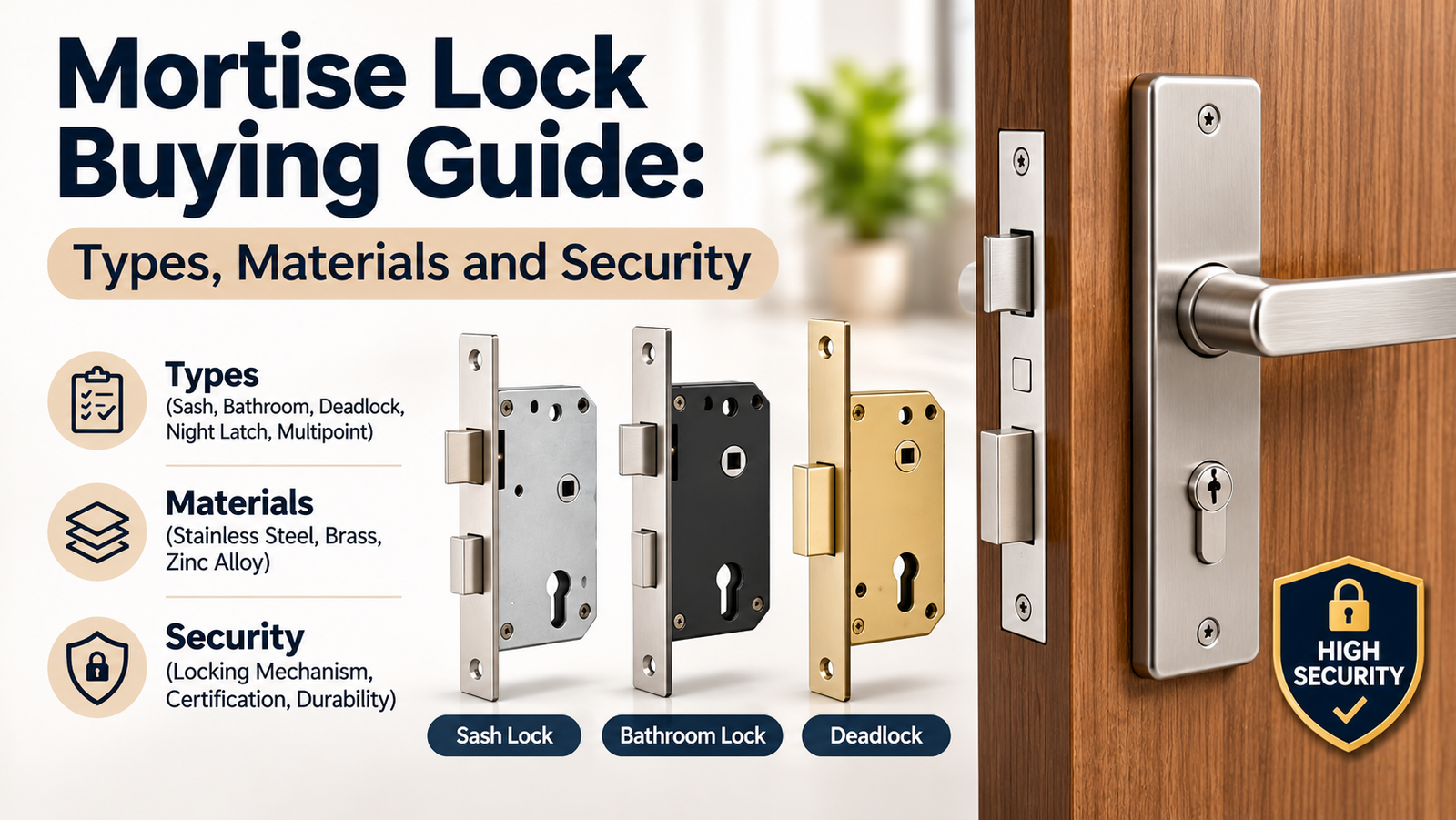
Types of Mortise Lock
| Type | How It Works | Best For |
|---|---|---|
| Sashlock | Latch bolt and deadbolt in one body | Main doors in homes and offices |
| Deadlock | Deadbolt only, no latch | Secondary doors, storerooms, shops |
| Bathroom lock | Thumb-turn indicator on the inside | Bathrooms and washrooms |
| Nightlatch combination | Adds a night latch for extra security | Entrance doors |
| Heavy-duty case | Thicker body for frequent use | Commercial and public buildings |
Each mortise lock type solves a different problem. A bedroom needs privacy, a front door needs strength, and a shop shutter door needs a deadbolt that resists force.
Material Matters for a Mortise Lock
Brass
Brass is a classic choice for the lock body and the cylinder. It machines accurately, resists wear and ages with a pleasant patina. Read more on brass door accessories if you want matching handles and fittings.
Stainless Steel
Stainless steel is a strong choice for faceplates, strikes and handles, especially in humid or coastal areas. The grade matters, so ask whether the part is 202, 304 or 316. The metal is introduced on Wikipedia.
Mild Steel and Zinc Alloys
Mild steel cases are common inside the door where they stay dry. They should be plated or coated to avoid rust. Lower-grade zinc parts can wear quickly, so check the weight and feel of any moving piece in the mortise lock you are considering.
How to Choose a Mortise Lock Step by Step
- Measure the door thickness and the stile width before choosing a case size.
- Decide the level of security: privacy only, standard entry or high security.
- Pick the handing, since many cases can be reversed but some cannot.
- Choose the material and finish that match your handles and hinges.
- Test the key, the latch and the deadbolt on a sample before placing a full order.
- Confirm the set includes the strike plate, screws and keys.
Keep the lock in your hand while you do this. A good mortise lock feels solid, the key turns without grit and the bolt slides out and back with a clean, firm action.
Warning Signs of a Poor Mortise Lock
- The key sticks or needs to be wiggled to turn.
- The latch bolt feels loose or does not spring back crisply.
- The case rattles when shaken.
- The faceplate is thin and bends under thumb pressure.
- Finish looks cloudy or uneven.
- No clear indication of material or origin.
Mortise Lock vs Surface Lock
| Feature | Mortise Lock | Surface Lock |
|---|---|---|
| Fitting | Inside the door edge | On the door face |
| Appearance | Clean, minimal | Visible case |
| Strength | Higher, because the bolt sits deep | Depends on screws and frame |
| Installation | Needs a cut-out in the door | Quick, minimal cutting |
| Retrofitting | Needs a suitable door thickness | Fits most doors |
If your door is thick enough, a mortise lock is usually the stronger and tidier choice. For thin doors, a surface lock may be the only option.
Fitting and Maintenance
Mark the door edge carefully and cut the mortise to the exact size of the case, because a loose case can wobble over time. After fitting, test the lock with the door open and then closed. Once or twice a year, clean the keyway with a puff of air and add a small amount of dry lubricant. Avoid heavy oils that attract dust. For deeper reading on door fittings, see door furniture.
Why Local Manufacturing Helps
Doors in Delhi NCR face dust, heat and humidity within the same year. A manufacturer based nearby understands these conditions and tests the mortise lock accordingly. Crown Industries produces locks, hinges and handles in Sahibabad, Ghaziabad, and describes its inspection process on the quality control page.
Contractors and dealers can send exact lock sizes and quantities through the contact page for guidance.
Expert Tip
Before buying a batch of any mortise lock, ask for two samples. Use one for a quick strength test and keep the other as a reference, so you can compare every delivery against the original.
Reviewed By
Door hardware specialists with practical experience in metal fabrication, finishing and quality inspection. This content is reviewed periodically to match current standards and market practice.
Frequently Asked Questions (FAQs)
1. What is a mortise lock used for?
It secures doors in homes, offices and shops. A mortise lock is built into the door edge, which makes it more secure and tidier than a surface lock.
2. What size mortise lock do I need?
The case size depends on door thickness and stile width. Measure both and match them to the lock before you order.
3. Can a mortise lock be fitted on any door?
It needs a door thick enough to hold the case. Very thin doors usually need a surface lock instead.
4. Is brass or stainless steel better for a mortise lock?
Brass offers smooth machining and classic looks, while stainless steel resists moisture well. Choose according to the climate and the look you want.
5. How do I fix a sticking mortise lock?
Clean the keyway, add a small amount of dry lubricant and check that the strike plate lines up with the latch. If the key still sticks, the case may be worn.
6. How long does a mortise lock last?
With sensible use and regular care, a well-made mortise lock can serve for many years. Wear usually shows first in the latch and the keyway.
7. Is a mortise lock more secure than a normal lock?
In most cases, yes. The case sits inside the door, and the deadbolt engages deeply in the frame, which makes forced entry harder.
8. Can I reverse the handing of a mortise lock?
Many cases are reversible, but not all of them. Check before buying if you are fitting the same lock to doors that open in different directions.
9. Does a mortise lock need special handles?
It works with matching handle sets or levers designed for its spindle size. Buying them together avoids fitting problems.
10. Where can I see Crown Industries mortise locks?
Visit the mortise lock page or call the team to request the catalogue.
Conclusion
A mortise lock rewards careful buying. Check the type, the material, the case size and the feel of the mechanism, and match the set to the door and the place it will live.
If you are looking for dependable locks, handles and hinges, explore Crownisi, made in Ghaziabad and supplied across India. Call +91 98111 07515 or browse more guides on our blog.