 10 Nov, 2026
What is a mortise handle?
A mortise handle is a door handle made to work with a mortise lock. A spindle joins the two sides, so turning either handle pulls back the latch.
Which mortise handle material lasts longest?
Stainless steel and brass both last well. Choose stainless steel for humid or coastal places and brass for a warm, traditional look.
How do I pick the right mortise handle?
Match the spindle and rose to your lock, choose a style that suits the users, and check the weight and finish by hand before you buy.
Why Trust This Guide?
| Trust Signal | Details |
|---|---|
| Updated for 2026 | Reflects current handle choices in Indian homes, offices and shops |
| Practical Focus | Based on fitting questions asked by carpenters, dealers and architects |
| Reference Sources | Door furniture overview and Bureau of Indian Standards |
| Transparent Authorship | Prepared by Crown Industries, a manufacturer of door accessories in Ghaziabad |
Last Reviewed: November 2026
Introduction
Of all the parts on a door, the handle is the one people touch every day. A mortise handle is the lever or pull that works with a mortise lock, and it shapes how a door feels in the hand long before anyone notices the lock inside. A smooth, well-weighted handle makes a door feel premium. A loose, light or sticky one makes even a well-made door feel poorly finished.
Choosing a mortise handle is not just about looks. Metal, spindle fit, rose size and finish all affect how long the set lasts. This guide explains how a mortise handle is built, how the main types differ and how to choose one that suits your door, your climate and your style.
What Is a Mortise Handle?
A mortise handle is a door handle designed to pair with a mortise lock case. A spindle runs through the case and connects the handles on both sides, so turning either one retracts the latch. Roses or escutcheons cover the screw fixings and the key hole, and give the set a finished look. The wider category is described under door furniture.
Because a mortise handle must align perfectly with the lock, it is best bought together with the mortise lock or chosen from a range designed to match.
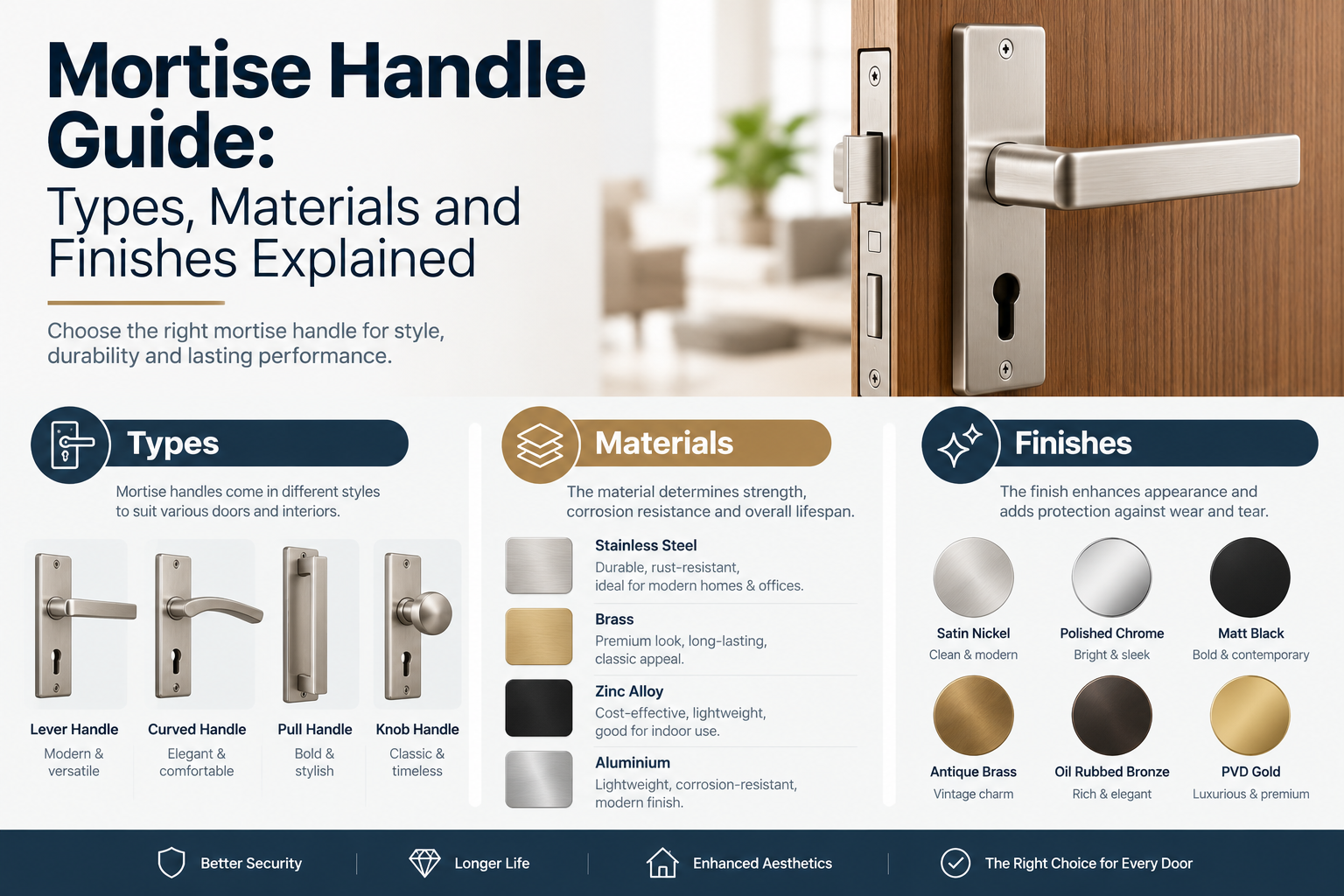
Common Types of Mortise Handle
| Type | Shape | Typical Use |
|---|---|---|
| Lever handle | Straight or curved bar | Homes, offices, accessible spaces |
| Pull handle | Fixed bar on the door face | Main entrance doors, glass doors |
| Knob | Round or oval | Traditional interiors |
| Lock-set handle | Handle with key or thumb-turn rose | Bedrooms, bathrooms, offices |
| Heavy-duty handle | Thicker and longer lever | Commercial entrances |
A lever mortise handle is usually the easiest to use, especially for children, elders and anyone carrying shopping. Knobs look classic but demand a firmer grip.
Choosing the Right Material
Stainless Steel
Stainless steel is a dependable choice for a mortise handle because it resists rust and cleans easily. Look at the grade, since 304 and 316 are better in humid or coastal areas. See the range of stainless steel door accessories to match hinges and fittings.
Brass
Brass has a warm look and a pleasant weight. It can be polished, antiqued or lacquered, and it is a favourite for traditional and heritage interiors. Explore brass door accessories if you want a consistent finish across the door.
Aluminium
Aluminium handles are lighter and suit windows, partitions and lightweight doors, particularly when anodised. They are covered in more detail under aluminium door accessories. For background, see anodising.
Finish and Feel
| Finish | Look | Maintenance |
|---|---|---|
| Mirror polish | Bright and reflective | Shows fingerprints, wipe often |
| Satin | Soft, matte-like | Hides marks well |
| Antique | Aged, warm | Low maintenance, gentle cleaning |
| Anodised (aluminium) | Even colour, durable | Wipe with a soft cloth |
A good finish is even in colour, free of pits and smooth to the touch. If the edge of a mortise handle feels sharp or rough, the polishing was rushed.
How to Choose a Mortise Handle Step by Step
- Check the spindle size and the case it will fit.
- Choose lever, pull or knob based on who uses the door.
- Pick the material by considering humidity, salt and sunlight.
- Select a finish that matches your hinges, locks and other fittings.
- Check the weight of the handle in your hand. A solid feel usually points to better material.
- Confirm the pack includes screws, roses and the spindle.
Mistakes to Avoid with a Mortise Handle
- Buying handles and locks from different sources without checking the spindle fit.
- Choosing a decorative finish that clashes with hinges and door furniture.
- Ignoring the door thickness, which affects spindle length.
- Fitting a light handle on a heavy, busy entrance door.
- Skipping simple care such as wiping with a soft cloth and avoiding harsh chemicals.
Care and Maintenance
Wipe a mortise handle with a damp soft cloth, then dry it. Avoid abrasive powders and strong cleaners, which can dull the finish. Once or twice a year, check the screws, because a loose handle will wear the spindle and the lock inside. For metal behaviour and corrosion basics, see the overview of corrosion.
Where to Buy a Reliable Mortise Handle
Crown Industries manufactures a range of handles, locks and hinges in aluminium, stainless steel, mild steel and brass at its Sahibabad unit in Ghaziabad. You can browse the mortise handle range or review the full product list. For quantity enquiries and size guidance, use the contact page.
Expert Tip
Hold the handle at arm's length and operate it ten times in the shop. A good mortise handle returns smoothly, sits level and shows no wobble at the rose.
Reviewed By
Door hardware specialists with practical experience in metal fabrication, finishing and quality inspection. This content is reviewed periodically to match current standards and market practice.
Frequently Asked Questions (FAQs)
1. What is the difference between a mortise handle and a rim handle?
A mortise handle works with a lock fitted into the door edge. A rim handle works with a surface-mounted lock on the door face.
2. Can I fit a mortise handle on an old door?
Yes, if the door has a suitable mortise cut-out and the spindle size matches. Measure both before buying.
3. Which is better, a lever or a knob?
Levers are easier to use, especially for children and older adults. Knobs suit traditional interiors but need a firmer grip.
4. Are brass mortise handle sets durable?
Yes. Brass handles wear well, and they can be polished, lacquered or left to age naturally.
5. How do I stop a mortise handle from sagging?
Tighten the fixing screws, check the spindle fit and replace worn parts. A sagging handle usually points to a loose rose or a worn spindle.
6. Does the finish affect durability?
It does. A good finish protects the metal. Uneven or thin finishing will wear off sooner, especially around the lever.
7. Can a mortise handle be used outdoors?
Yes, provided the metal grade suits the weather. Use 304 or 316 stainless steel in humid or coastal areas.
8. How do I clean a mortise handle?
Wipe with a soft damp cloth and dry it. Avoid abrasive powders and strong chemicals.
9. Can I mix different brands of handle and lock?
You can, but check the spindle size and the case compatibility first. Matching sets avoid fitting problems.
10. Where can I see Crown Industries handles?
Visit the mortise handle page or call the team to request the catalogue.
Conclusion
The right mortise handle looks good, feels solid and lasts for years. Check the metal, the finish, the spindle fit and the weight, and match them to the lock and the door.
If you want reliable handles, locks and hinges, explore Crownisi, made in Ghaziabad and supplied across India. Call +91 98111 07515 or read more on our blog.