 17 Nov, 2026
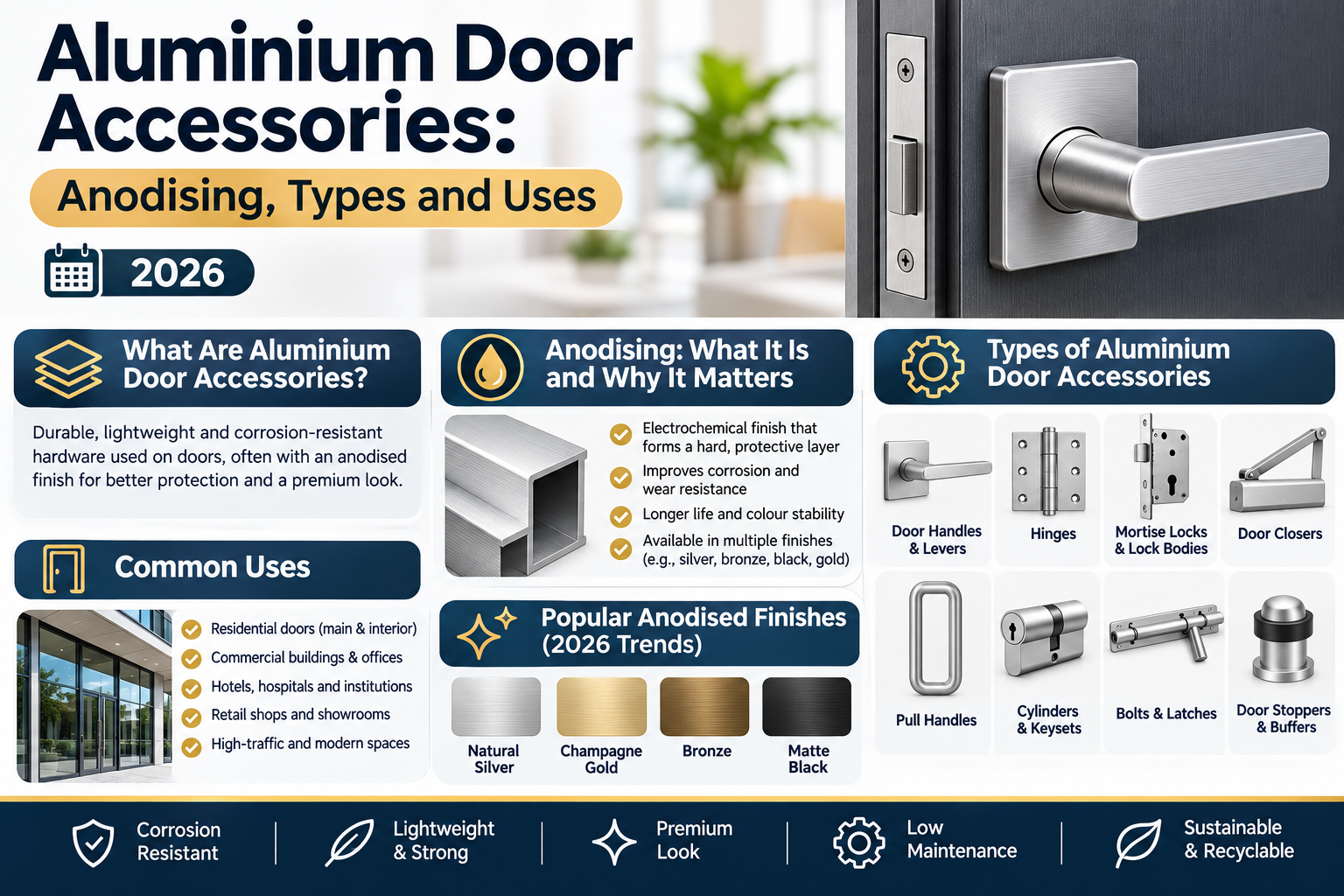
What are aluminium door accessories?
They are door and window fittings made from aluminium, such as handles, hinges, bolts, aldrops and channels. They are light, resist corrosion and suit windows, partitions and lightweight doors.
Why is anodising important for aluminium door accessories?
Anodising hardens the surface and improves weather resistance and colour retention. It becomes part of the metal, so it does not peel like paint.
Can aluminium replace stainless steel on doors?
For windows and light doors, yes. For heavy or high-security doors, stainless steel or brass is usually the better choice.
Why Trust This Guide?
| Trust Signal | Details |
|---|---|
| Updated for 2026 | Reflects current fabrication practice in Indian homes, offices and shopfronts |
| Manufacturing Context | Written by a team that runs cutting, polishing and anodising in Ghaziabad |
| Reference Sources | Aluminium overview and The Aluminum Association |
| Transparent Authorship | Prepared by Crown Industries, who manufacture aluminium door accessories |
Last Reviewed: November 2026
Introduction
Walk through any modern building in India and you will see aluminium on the doors, windows, partitions and shopfronts. It is light, it does not rust in the usual way and it takes colour well. That is why aluminium door accessories, from handles and hinges to bolts and channels, have become a standard part of fabrication work.
Still, quality varies widely. Thin extrusions, patchy anodising and loose fittings make aluminium door accessories look good on day one and tired by year two. This guide explains how aluminium hardware is made, how anodising protects it and how to choose the right pieces for the job.
What Are Aluminium Door Accessories?
Aluminium door accessories are fittings made from aluminium or aluminium alloy, covering handles, hinges, bolts, aldrops, channels, stoppers and sliding fittings. Aluminium is valued for its low weight and natural resistance to corrosion, as outlined on Wikipedia and by The Aluminum Association. You can see the available aluminium door accessories at Crown Industries.
Why Anodising Matters
Anodising is an electrochemical process that thickens the natural oxide layer on aluminium, making it harder, more weather resistant and able to hold colour. A good anodised finish does not peel like paint because it becomes part of the metal. The process is summarised under anodising.
| Finish | Look | Strength | Best Use |
|---|---|---|---|
| Natural anodised | Soft silver | Good | Windows and partitions |
| Electro-coloured (bronze, black, champagne) | Rich, consistent colour | Good, with colour layer | Shopfronts, offices, homes |
| Powder coated | Wide colour range | Good if applied well | Decorative and exterior fittings |
| Polished | Bright, reflective | Moderate, needs care | Interior accents |
Ask the supplier how the aluminium door accessories were finished. A factory with its own anodising and electro-colouring lines can keep colour matching between batches, which matters when parts are replaced later.
Common Aluminium Door Accessories and Their Uses
- Handles and pulls: light, comfortable and available in many profiles.
- Hinges: suited to aluminium doors, frames and light shutters.
- Tower bolts and aldrops: simple locking for secondary doors and windows.
- Channels and sections: used in sliding doors and partitions.
- Stoppers and holders: protect walls and keep doors open.
- Window fittings: stays, latches and handles.
Aluminium vs Other Metals
| Feature | Aluminium | Stainless Steel | Brass | Mild Steel |
|---|---|---|---|---|
| Weight | Light | Heavy | Heavy | Heavy |
| Rust | Does not rust, may oxidise | Very resistant | Resistant | Rusts unless coated |
| Strength | Moderate | High | Medium to high | High |
| Best for | Windows, partitions, light doors | Main doors, wet areas | Premium interiors | Utility doors |
Aluminium is rarely the answer for a heavy timber entrance door, where stainless steel hinges or brass fittings carry the load better. For windows and partitions, though, aluminium door accessories are hard to beat.
How to Choose Good Aluminium Door Accessories
- Check the wall thickness. Thin extrusions bend and flex.
- Inspect the anodising for even colour, with no streaks or bare patches.
- Test moving parts such as hinges and bolts for smooth action.
- Make sure the fittings suit the section size of your frame.
- Compare samples from different batches to confirm consistency.
- Ask about the finishing process and the colour options.
Where Aluminium Door Accessories Work Best
Windows, sliding doors, office partitions, glazed shopfronts, bathroom doors and balcony doors are the usual homes for aluminium. In coastal areas, anodised aluminium handles up well, though regular cleaning helps remove salt deposits. For wet or heavy-duty entrances, consider pairing aluminium frames with stainless steel door accessories where strength matters.
Care Tips
- Wash with mild soapy water and a soft cloth.
- Avoid abrasive pads that scratch the anodised surface.
- Rinse and dry fittings near the sea to remove salt.
- Lubricate moving parts with a silicone-based spray.
- Tighten loose screws early to prevent wear.
Sourcing Aluminium Door Accessories in India
Crown Industries makes aluminium door accessories in Sahibabad, Ghaziabad, with in-house cutting, grooving, polishing, anodising and electro-colouring. That control helps keep colour and size consistent from batch to batch. Read how inspection works on the quality control page, browse the product range or send a requirement through the contact page.
Expert Tip
Hold anodised samples under daylight, not shop lighting. Colour differences between batches show up clearly outdoors, and it is much easier to catch them before fitting than after.
Reviewed By
Door hardware specialists with practical experience in metal fabrication, finishing and quality inspection. This content is reviewed periodically to match current standards and market practice.
Frequently Asked Questions (FAQs)
1. Do aluminium door accessories rust?
Aluminium does not rust like steel, though it can oxidise and dull over time. Anodising slows this and keeps the surface looking even.
2. Are aluminium door handles strong?
They are strong enough for windows, partitions and lightweight doors. For heavy timber entrances, steel or brass handles carry the load better.
3. What colours do aluminium door accessories come in?
Natural silver, bronze, black and champagne are common, depending on the anodising and electro-colouring options available.
4. Can aluminium fittings be used near the sea?
Yes, when anodised properly and rinsed regularly to remove salt. Stainless steel 316 is an alternative for exposed doors.
5. How do I clean aluminium door accessories?
Use mild soapy water and a soft cloth. Avoid scouring pads and harsh chemicals that damage the finish.
6. Why do some aluminium fittings fade?
Poor anodising or thin colour layers fade in sunlight. Choosing a supplier with controlled anodising helps avoid this.
7. Are aluminium door accessories lighter than steel?
Yes, noticeably. That makes them easier to fit and suits frames that cannot carry much weight.
8. Can I mix aluminium and stainless steel fittings?
You can, but use matching screws and avoid constant contact with water, because mixed metals can corrode together in damp conditions.
9. How long do aluminium door accessories last?
With proper anodising and basic care, they can last for many years. Moving parts usually wear before the body does.
10. Where can I see Crown Industries aluminium products?
Visit the aluminium door accessories page or call the team to request the catalogue.
Conclusion
Aluminium door accessories are light, practical and tidy, but only when the extrusion is solid and the anodising is done well. Check the thickness, the finish and the moving parts before you buy.
For reliable hardware, explore Crownisi, made in Ghaziabad and supplied across India. Call +91 98111 07515 or read more on our blog.