 05 Aug, 2026
 Let me tell you something about handles. You touch them every single day. Multiple times. Morning, noon, night. The front door when you leave for work. The kitchen cabinet when you make tea. The bathroom door. The bedroom door. They are everywhere.
But when was the last time you actually thought about what your handles are made of? Most people never do. They pick whatever is cheap or whatever the shopkeeper suggests. Then six months later, the handle is loose, the paint is peeling, or it feels flimsy in your hand.
I have been in this business long enough to tell you this: the material of your handle matters. A lot. It determines how long your handle will last, whether it will rust, how it will feel in your hand, and even how secure your door will be.
Two of the most popular choices for door handles are mild steel and stainless steel. Both are excellent materials. Both have their strengths. But they are very different.
If you are trying to decide between a mild steel handle and a stainless steel handle 304G , this guide will help you make the right choice. Let me break down the differences in simple, practical terms.
What Is Mild Steel?
Before we talk about handles, you need to understand what mild steel actually is.
Mild steel is also called low carbon steel. It has less than 0.3 percent carbon in it. That low carbon content makes it soft and easy to work with. You can bend it, shape it, weld it, and machine it without too much trouble.
Mild steel sits right in the middle. It is strong enough for most jobs. It is affordable. It is easy to shape into different designs. That is why so many handles are made from it.
The catch? Mild steel rusts. It has no chromium to protect itself. So it needs a coating—paint, powder coating, or something to keep moisture away. At Crown ISI , we take care of this. Our mild steel handle products get proper finishing so they last for years.
For key applications and differences between mild steel and stainless steel, visit Jindal Stainless – Difference Between Stainless Steel and Mild Steel .
Key Properties of Mild Steel
| Property | Details |
|---|---|
| Carbon Content | Less than 0.3% |
| Tensile Strength | 400-550 MPa |
| Corrosion Resistance | Poor (rusts without coating) |
| Malleability | High (easy to shape and weld) |
| Cost | Low |
| Lifespan | 3-5 years without proper maintenance |
What Is Stainless Steel?
Stainless steel is different. It has chromium and nickel added to the steel. The chromium creates a shield that stops rust. The nickel adds strength and shine.
The most common grade for door hardware is SS 304. This contains 18% chromium and 8% nickel. That is why you see "304" or "304G" stamped on genuine stainless steel hardware. The "G" indicates that the product meets the quality standards required for ISI certification.
Stainless steel handles cost more than mild steel. But they never rust. They are great for bathrooms, coastal areas, or anywhere with moisture.
For detailed information on stainless steel properties and corrosion resistance, visit Aalco – Stainless Steel General Information .
Key Properties of Stainless Steel (SS 304)
| Property | Details |
|---|---|
| Chromium Content | 18% |
| Nickel Content | 8% |
| Corrosion Resistance | Excellent (never rusts) |
| Tensile Strength | Higher than mild steel |
| Cost | Higher than mild steel |
| Lifespan | 15+ years |
Mild Steel Handles: The Complete Picture
Let us look at mild steel handles in detail.
Advantages of Mild Steel Handles
1. Cost-Effective
Mild steel is affordable. Much cheaper than stainless steel or brass. If you are doing a whole house or a commercial project, the savings add up. You get good quality without emptying your pocket.
2. Easy to Shape
Because mild steel is soft, you can make all kinds of shapes with it. Simple designs. Fancy designs. Curves. Details. Whatever you need. This is why you see so many different styles in the market.
3. Good Strength
Mild steel is strong. A door handle gets pulled and pushed thousands of times. Mild steel handles this just fine. The tensile strength is around 400-550 MPa—plenty for normal use.
4. Widely Available
Mild steel is everywhere. Easy to find. Easy to get in any quantity. This matters when you need consistent supply for a big project.
Disadvantages of Mild Steel Handles
1. Rusts Easily
This is the biggest drawback. Mild steel has no chromium to protect it. When exposed to moisture and oxygen, it readily undergoes oxidation, forming iron oxide—commonly known as rust.
Mild steel handles are cheap. You buy them for 50 or 100 rupees. But after one rainy season, they start showing brown spots. That is rust. After two years, the handle becomes rough. Your hand may get small cuts.
2. Requires Coating
Raw mild steel will rust fast. So it needs a coating—paint, powder coating, or something to keep moisture away. If the coating gets scratched or worn, rust starts immediately.
3. Shorter Lifespan
Without proper maintenance, mild steel handles last only 3-5 years. Compare that to stainless steel, which lasts 15+ years.
4. Needs Maintenance
Mild steel handles need regular maintenance to prevent rust. They may need repainting or recoating over time. This adds to the long-term cost.
Best Applications for Mild Steel Handles
Mild steel handles are best for:
Dry, indoor applications
Budget-conscious projects
Temporary or rental properties
Areas where corrosion is not a concern
As one source notes, mild steel is "more suited for cost-sensitive applications where corrosion resistance is not a primary concern".
Stainless Steel Handles: The Complete Picture
Now let us look at stainless steel handles.
Advantages of Stainless Steel Handles
1. Never Rusts
This is the number one reason. Stainless steel contains chromium, which forms a protective layer on the surface. This layer prevents rust and corrosion. Even if the steel gets scratched, that layer heals itself.
Stainless steel handles are "highly resistant to wear and tear, making it ideal for high-traffic areas". They "resist rust and staining, which is particularly useful in moist environments like kitchens and bathrooms".
2. Long Lifespan
Stainless steel handles last 15+ years. Some manufacturers offer a 25-year guarantee on 304 stainless steel finishes. You pay once and forget about replacement forever.
For a comprehensive guide on stainless steel grades and properties, visit AZoM – Introduction to Stainless Steel Grades .
3. Low Maintenance
Stainless steel handles require very little maintenance. They do not need painting or regular coating. A simple wipe with a damp cloth is usually all they need.
4. Modern Aesthetic Appeal
Stainless steel handles have a clean, modern look. They are available in satin (brushed) and mirror (highly polished) finishes. They "offer a sleek appearance, suitable for contemporary and minimalist interior designs".
5. Hygienic Properties
Stainless steel has a smooth, non-porous surface that does not harbour bacteria. This makes it a hygienic choice for healthcare facilities, food processing areas, and other environments where cleanliness is critical.
6. Fire Resistance
Stainless steel is non-combustible and can withstand high temperatures. This makes it a safer choice for fire-rated doors.
Disadvantages of Stainless Steel Handles
1. Higher Cost
Stainless steel handles cost more than mild steel. The premium material and manufacturing process make them more expensive.
2. Harder to Work With
Stainless steel is harder and less malleable than mild steel. This means it is more difficult to shape into complex designs.
Best Applications for Stainless Steel Handles
Stainless steel handles are best for:
Humid environments (bathrooms, kitchens)
Coastal areas (salt-laden air)
High-traffic areas (commercial buildings, offices)
Exterior doors
Healthcare and food facilities
Any application where longevity and low maintenance are priorities
Mild Steel vs Stainless Steel: Head-to-Head Comparison
Here is a clear side-by-side comparison to help you see the difference:
| Feature | Mild Steel Handle | Stainless Steel Handle (304G) |
|---|---|---|
| Composition | Iron with <0.3% carbon | 18% chromium, 8% nickel |
| Corrosion Resistance | Poor (rusts without coating) | Excellent (never rusts) |
| Strength | 400-550 MPa tensile strength | Higher tensile strength |
| Durability | 3-5 years | 15+ years |
| Maintenance | High (needs coating, repainting) | Low (occasional wiping) |
| Aesthetic | Dull, needs paint | Clean, modern, available in satin/mirror |
| Cost | Low | Higher |
| Workability | Easy to shape and weld | Harder to work with |
| Best For | Budget projects, dry interiors, temporary use | All applications, especially humid/coastal areas |
| ISI Certified | Available (ISI mark Mild Steel Door fittings) | Available (304G ISI mark) |
Mild steel is more malleable and less expensive, but it's also more prone to corrosion. Stainless steel contains chromium for protection and offers better strength and corrosion resistance.
For a detailed comparison of corrosion resistance, malleability, and cost, visit Thyssenkrupp – Difference Between Mild Steel vs Stainless .
As one source notes, iron has poor corrosion resistance and rusts. Stainless steel is highly corrosion-resistant due to chromium content. Titanium alloy offers the highest strength-to-weight ratio but is much more expensive.
For a detailed comparison of hinges made of different materials including iron, stainless steel, and titanium alloy, visit Goodcen – Comparison of Hinges Made of Different Materials .
ISI Mark Certification: Why It Matters
The ISI mark is a certification from the Bureau of Indian Standards (BIS). It ensures that the product meets Indian quality and safety standards.
For mild steel handles, look for ISI mark Mild Steel Door fittings . This guarantees that the product has been tested and meets Indian standards.
For stainless steel handles, look for 304G or SS 304 engraved on the handle. The "G" indicates that it meets the quality standards required for ISI certification. A genuine SS 304 stainless steel handle will have "SS 304" or "304G" engraved on it.
Why This Matters: From October 2023, all door fittings sold in India must have ISI certification. This includes handles, hinges, tower bolts, and other hardware. Buying ISI-certified products ensures you are meeting regulatory requirements while getting a quality product.
Real-World Examples
Let me share a real example. My friend Ramesh built his home and used mild steel handles on all his doors. They looked fine initially. But after one monsoon season, brown spots appeared. After two years, the handles were rough and the paint was peeling.
He ended up replacing them all with Crown Stainless Steel Door Fittings . The stainless steel handles have been on his doors for five years now. They still look brand new. No rust. No peeling. No maintenance.
The lesson? A cheap handle might save you a few rupees today, but it will cost you more in the long run.
Crown ISI: Your Trusted Partner for Both
When you need a mild steel handle or a stainless steel handle 304G , Crown ISI is the name you can trust.
Over 39 Years of Experience
Crown Industries has been manufacturing high-quality door fittings for over 39 years. Our products are trusted by government departments, semi-government organizations, and public sector undertakings across India.
Genuine Materials
For mild steel handles, Crown ISI uses proper finishing so they last. For stainless steel handles, Crown ISI uses real 304G stainless steel. No mixing. No cheap metal.
ISI-Certified Products
All Crown ISI products carry the ISI mark, ensuring they meet Indian quality and safety standards. We manufacture both ISI mark Mild Steel Door fittings and Crown Stainless Steel Door Fittings .
Complete Range of Products
Crown ISI offers a complete range of door fittings including:
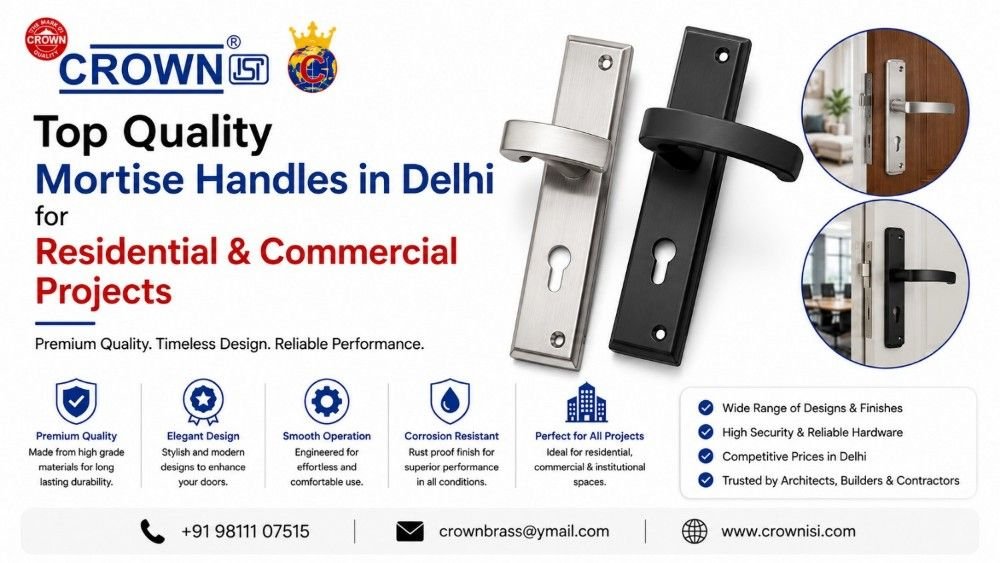
Mild steel handles – Available in various styles and sizes
Stainless steel handles 304G – For long-lasting, rust-free performance
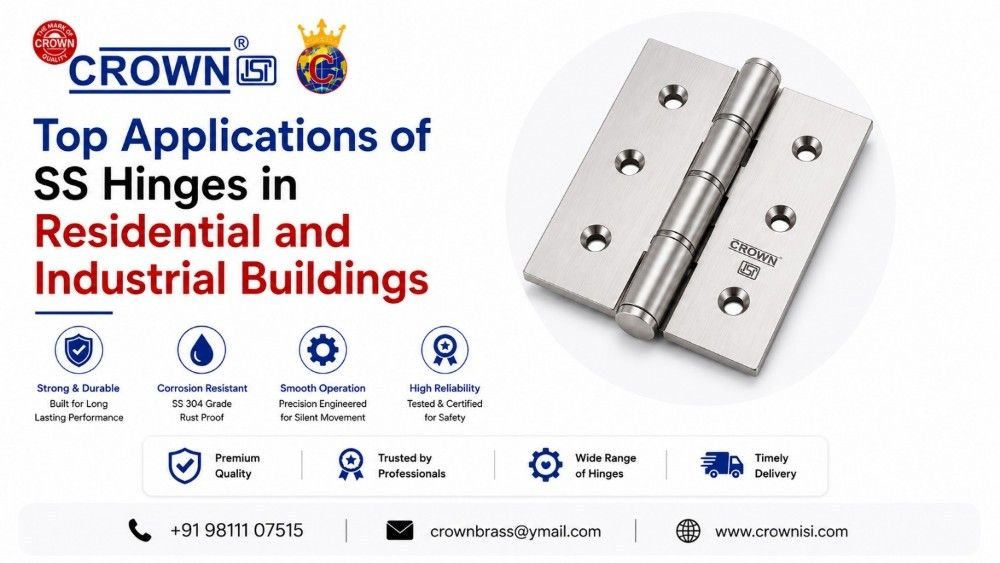
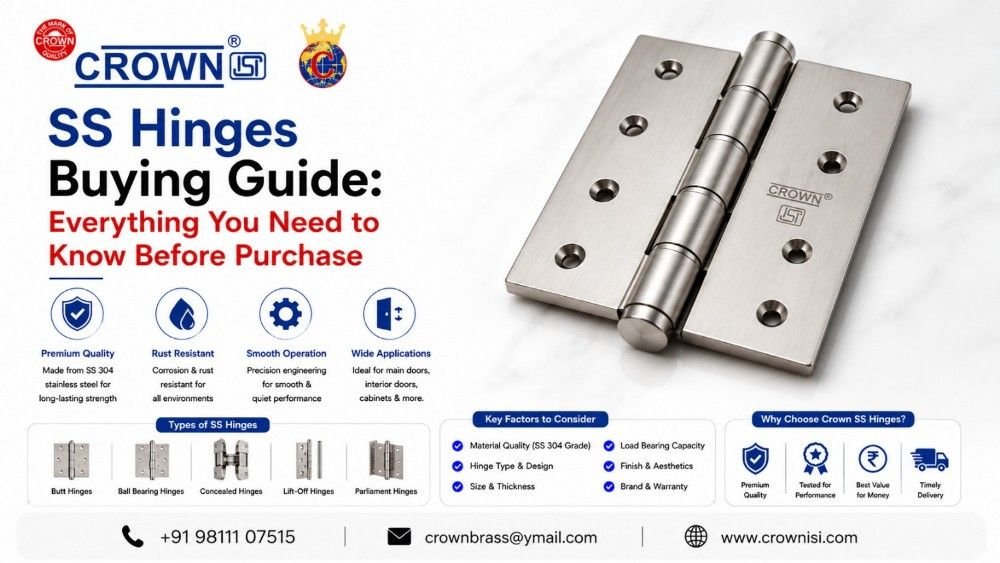
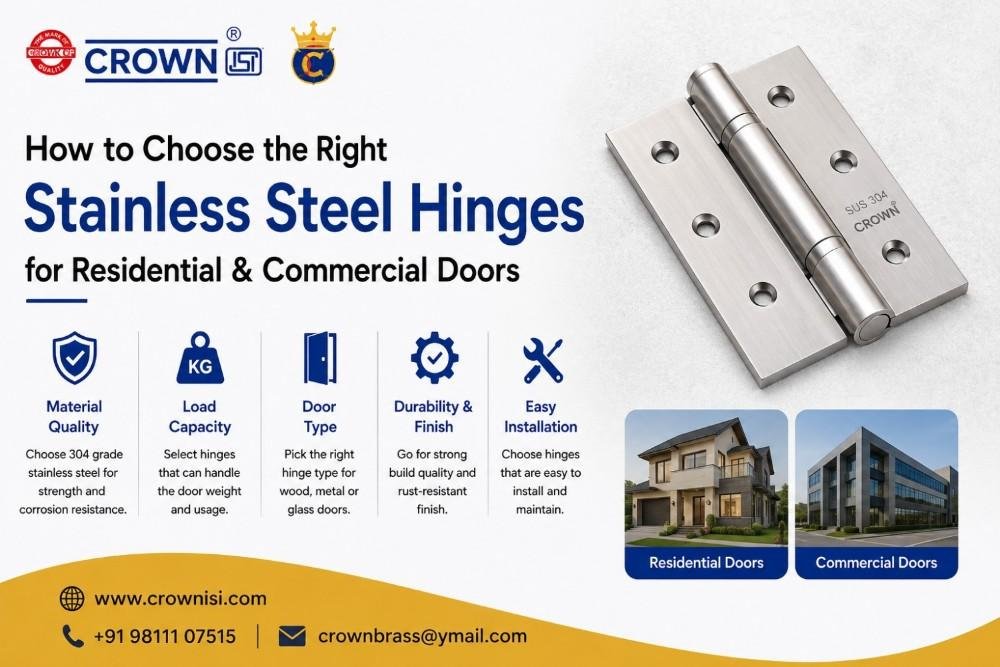
Stainless steel butt hinges – For smooth, silent door operation
Quality Control – Every product is tested for quality and finish
Trusted by Professionals
Crown ISI products are used and patronised by various government, semi-government, and public sector organisations. The company has executed a number of small, medium, and large projects for government departments and semi-government departments.
Frequently Asked Questions (FAQs)
1. What is the difference between mild steel and stainless steel handles?
Mild steel handles are made from low carbon steel. They are cheaper but rust easily without coating. Stainless steel handles contain chromium and nickel, which prevent rust. Stainless steel costs more but lasts longer and requires less maintenance.
2. Which is better for bathroom doors—mild steel or stainless steel?
Stainless steel is better for bathroom doors. Bathrooms are humid environments. Mild steel handles will rust within months in bathroom humidity. Stainless steel handles will stay rust-free for years.
3. Do mild steel handles rust?
Yes. Mild steel has no chromium to protect it. When exposed to moisture and oxygen, it readily undergoes oxidation, forming rust. That is why mild steel handles need a coating—paint, powder coating, or something to keep moisture away.
4. Do stainless steel handles rust?
No. Stainless steel contains chromium, which forms a protective layer on the surface. This layer prevents rust and corrosion. Even if the steel gets scratched, that layer heals itself.
5. Which is more expensive—mild steel or stainless steel?
Stainless steel is more expensive than mild steel. The chromium and nickel added to stainless steel increase the cost. However, stainless steel lasts much longer, making it more cost-effective in the long run.
6. How long do mild steel handles last?
Without proper maintenance, mild steel handles last only 3-5 years. With proper coating and maintenance, they can last longer. Stainless steel handles last 15+ years.
7. What is 304G stainless steel?
304G refers to grade 304 stainless steel that meets the quality standards required for ISI certification. It contains 18% chromium and 8% nickel, providing excellent corrosion resistance.
8. What is the ISI mark, and why is it important?
The ISI mark is a certification from the Bureau of Indian Standards that ensures the product meets Indian quality and safety standards. From October 2023, all door fittings sold in India must have ISI certification.
9. Can I use mild steel handles on exterior doors?
Mild steel handles are not recommended for exterior doors. They will rust when exposed to rain and humidity. For exterior doors, choose stainless steel handles for their corrosion resistance.
10. Why should I choose Crown ISI for door handles?
Crown ISI has been manufacturing high-quality door fittings for over 39 years. Our products are ISI-certified, made from quality materials, and undergo rigorous quality checks. We are trusted by government departments and public sector organizations across India.
Final Thoughts
Choosing between mild steel and stainless steel handles comes down to your specific needs.
Choose mild steel if:
You are on a tight budget
The handles will be used in dry, indoor areas
You do not mind occasional maintenance
The project is temporary or for rental properties
Choose stainless steel if:
You want handles that never rust
The handles will be in humid areas (bathrooms, kitchens)
You want low-maintenance hardware
You want handles that last for decades
The building is in a coastal area
Both are excellent materials. But for most applications—especially in Indian conditions with humidity and monsoons—stainless steel is the smarter long-term investment.
If you are looking for the best mild steel handle or stainless steel handle 304G , look no further than Crown ISI .
With over 39 years of experience, ISI-certified products, and rigorous quality control, Crown ISI is the name you can trust for all your door hardware needs.
Visit our products page to explore our full range of stainless steel handles and door fittings. For our mild steel range, check out our mild steel door accessories page.
Contact us today for more information or to place your order.
Contact Information
Crown Industries
Factory: 39/2/9A, Site IV, Industrial Area, Sahibabad, Distt. Ghaziabad (U.P.)
Office: 500 Kuchha Pati Ram, Bazar Sita Ram, Delhi 110006
Phone: +91 98111 07515