 28 Nov, 2025
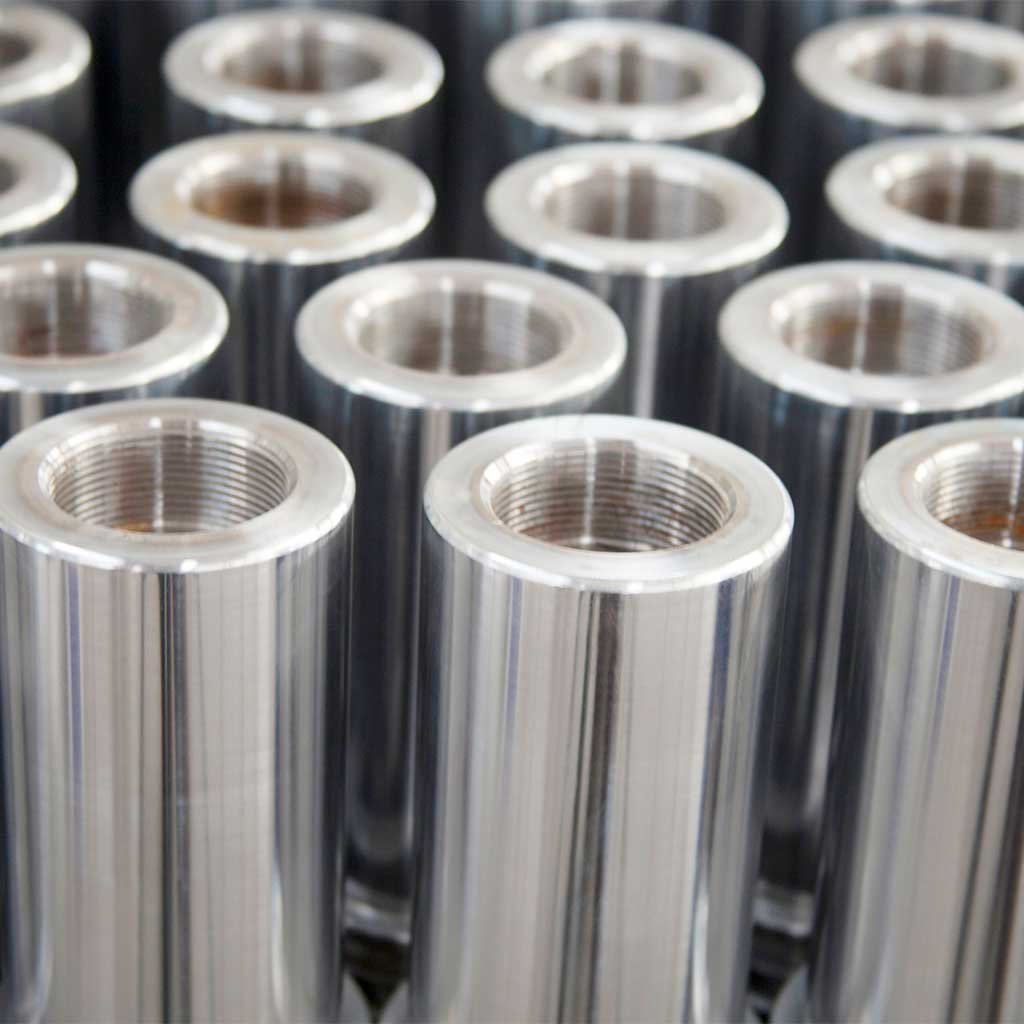
 Stainless steel grades 304 (SS304) and 316 (SS316) are among the most common austenitic stainless steels. Their main chemical distinction is that 304 (sometimes called “18/8” stainless steel) contains about 18–20% chromium and 8–10% nickel, whereas 316 contains roughly 16% chromium, 10% nickel, and 2–3% molybdenum. The extra molybdenum in SS316 dramatically enhances its corrosion resistance – especially against chlorides (like saltwater) and acids – and also increases its hardness and tensile strength. In practice, SS304 is far more economical and is widely used for general-purpose applications, while SS316 (often called “marine grade” stainless) is chosen when durability in harsh or corrosive environments is needed.
What is 304 Stainless Steel?
304 stainless steel is a widely used, general-purpose alloy. It is an austenitic iron alloy with high chromium and nickel content. Because of this composition, 304 resists rust and oxidation well and can be formed into many shapes. In fact, 304 stainless is known as a versatile, high-strength steel used across industries. For example, 304 is often called 18/8 stainless steel (or 18/10 in cutlery) due to its typical 18% Cr and 8% Ni. This mix makes a protective chromium-oxide layer on the surface, helping it withstand moisture and many chemicals. Its durability and hygienic surface also make it easy to clean, which is why 304 is common in food-related and medical applications.
- Kitchen and Food Processing: 304 is used for sinks, pots and pans, cookware, and commercial food equipment It resists corrosion from food and cleaning chemicals, so you’ll find it in ovens, baking equipment, and large brewing or storage tanks.
- Appliances and Hardware: You’ll see 304 in home appliances (refrigerators, dishwashers) and in hardware like screws, bolts, and trim. For instance, many architectural panels, handrails and even fasteners (nuts and bolts) are made from 304 because it holds up well outdoors and looks clean
- Automotive and Industrial: 304 is used in car parts (exhaust manifolds, wheel covers, trim) and in general industrial equipment. Its strength and formability make it good for things like exhaust systems and pressure vessels. In short, 304’s combination of corrosion resistance and toughness makes it a workhorse for kitchens, buildings, and machinery.
What is Type 316 Stainless Steel and What is it Used For?
Type 316 stainless steel is very similar to 304 but with added molybdenum (about 2–3%). This extra element boosts its corrosion resistance, especially against chlorides and acidic solutions. In practice, 316 can withstand salt water and harsh chemicals that would pit or corrode 304. For this reason 316 is often called marine-grade stainless steel. It is also stronger at high temperatures and under stress than 304. Because of these properties, 316 is chosen for more demanding environments.
- Chemical and Pharmaceutical Plants: Type 316 is used to make equipment that handles corrosive substances, such as chemical processing vessels, reactors, pumps, and valves. For example, tanks and piping in food, dairy and pharmaceutical industries are often 316 so they resist acid cleaning solutions and moisture.
- Marine and Outdoor Applications: Boats, coastal architecture, and outdoor fittings use 316 because salt spray and seawater are very corrosive. Ship parts, offshore structures, docks, and even seaside building panels are often 316 stainless. In marine environments where rust is a big concern, 316’s extra protection is crucial.
- Medical and Lab Equipment: 316 is used for surgical instruments, implants (like pins and plates), and laboratory equipment. Its resistance to sterilization chemicals and body fluids makes it suitable for medical devices. Operating tables, lab benches, and pharmaceutical processing tools are often made of 316 for safety and cleanliness.
- High-Temperature and High-Corrosion Parts: Components that see both heat and corrosive conditions often use 316. Examples include exhaust manifolds, heat exchangers, and furnace parts. In power plants or engine systems where heat and chemicals are present, 316’s performance is better than 304.
Also Read: Difference between 304 and 202 stainless steel
Chemical Composition and Material Properties
- SS304: An austenitic stainless steel alloy with roughly 18–20% chromium and 8–10% nickel, plus small amounts of carbon, manganese, and silicon. It is very common and versatile.
- SS316: Also an austenitic stainless steel but with 2–3% molybdenum added in addition to about 16% Cr and 10% Ni. The molybdenum is the key difference – it gives SS316 much higher resistance to corrosion and chloride pitting, and slightly higher strength and hardness. For example, SS316’s yield strength (~290 MPa) is higher than SS304’s (~215 MPa), and its hardness (79 HRB) exceeds SS304’s (70 HRB). However, SS304 has a higher elastic modulus (≈193–200 GPa vs 164 GPa for 316), meaning SS304 is slightly stiffer under load.
- 316L variant: SS316L is a “low carbon” version of 316 that further boosts corrosion resistance and weldability. The “L” indicates very low carbon content, which improves resistance to intergranular corrosion and makes it perform better in cold or high-temperature service. Many marine or medical applications use 316L for this reason.
Corrosion Resistance and Environmental Use
The extra molybdenum in SS316 has a big impact on corrosion performance. In normal indoor or mild environments (like dry air, tap water, mild acids) SS304 already offers good corrosion resistance and durability. It is frequently used for kitchen equipment, water piping, indoor enclosures, automotive trim, and food-preparation surfaces. However, SS304 is vulnerable in aggressive environments: for example, salt or chlorides can penetrate its protective oxide layer and cause pitting or rust.
By contrast, SS316 is far more resistant to saltwater, chlorides, and acids. Industry references note that SS316 “can easily resist chlorides found in salty water” and is widely used in marine and chemical applications. Bergsen Metals explains that SS316’s molybdenum “improves its resistance to harmful acids, alkalis, and chloride pitting,” making SS316 ideal for harsh environments. In practice, SS316 is chosen for outdoor or coastal projects, marine hardware, chemical/energy equipment, and food-processing facilities where strong cleaning agents are used. Both grades resist oxidation, but only 316 can reliably handle continuous exposure to saltwater, de-icing chemicals, sulfuric acid, and similar corrosives.
- Key point: If the application involves seawater, road salt, or aggressive chemicals (e.g. coastal railings, pharmaceutical tanks, marine equipment), SS316 is strongly preferred. SS304 suffices for typical indoor uses and non-chloride environments.
Mechanical and Physical Properties
While composition drives the major differences, SS304 and SS316 share many properties. Both are non-magnetic austenitic stainless steels, weldable and formable by standard methods. Compared to many steels, both are quite durable and corrosion-resistant. However, small mechanical differences exist:
- Tensile Strength: In overlapping ranges (roughly 500–750 MPa, depending on thickness), both grades are similar.
- Yield Strength: SS316 has a higher yield (~290 MPa) than SS304 (~215 MPa). This means 316 components can withstand slightly higher stress before deforming.
- Hardness: SS316 (79 HRB) is marginally harder than SS304 (70 HRB. The practical effect is small, but 316 can be better for parts subject to wear or friction.
- Elastic Modulus: SS304’s modulus (~193–200 GPa) is higher than 316’s (~164 GPa), so SS304 is a bit stiffer (less elastic) under load.
- Heat Resistance: SS304 melts ~50–100°F higher than 316, giving it a slight edge in very high-temperature applications. However, both have good high-temperature strength (SS316 is good above 843°C as well).
- Weldability: Both grades are readily welded. SS316L (low-carbon) is sometimes used for better weld performance, but both SS304 and SS316 are standard weldable austenitic steels.
People Also Like:- Top 10 Door Lock Brands in India 2025
Common Applications
Because of their similar base properties, SS304 and SS316 are both widely used in industry, often even in the same facility, but targeted to different needs. Typical applications include:
- SS304 Uses: Widely used for indoor and moderate environments. Common examples are kitchen appliances, sinks, and utensils (counters, cookware), water piping and tanks, automotive trim and wheel covers, storage tanks and pressure vessels (non-corrosive), and indoor electrical or HVAC enclosures. It is also popular for decorative trim and architecture where corrosion is not extreme. SS304 is valued in food processing equipment because its composition helps prevent contamination.
- SS316 Uses: Preferred for harsh or corrosive environments. This includes marine hardware (propellers, ship fittings, dock parts), chemical and petrochemical processing equipment, pharmaceutical and medical instruments, food & beverage processing (especially where sterilization is needed), outdoor enclosures and signage, and anywhere salt or chlorides are present
- . For example, surgical implants, coastal construction, and chemical plant components often use SS316 or SS316L.
Numerous sources concur on these uses. CPV Manufacturing notes SS304 appears in “kitchen sinks and other appliances” and even building facades, while SS316 is used in marine, gas-refining, surgical instruments and the paper industry. Bergsen Metals similarly lists 304’s applications (kitchen equipment, indoor enclosures, auto trim, tanks) and 316’s (chemical, pharmaceutical, outdoor, marine, medical). In short, SS304 is a cost-effective “workhorse” for general use, and SS316 is a premium grade when extra corrosion resistance and longevity are required.
Cost and Price Considerations
Because of its extra alloying (molybdenum is expensive), SS316 typically costs significantly more than SS304. Industry guides report that SS316 can be on the order of 50–100% higher in price than SS304. For example, Rapiddirect notes SS316 prices are roughly “75% more” than SS304. Practically speaking, SS304 is far cheaper to buy and to fabricate, which is why it is used whenever its performance is adequate. SS316’s higher upfront cost is often justified only in corrosive service, where its longer service life and reliability can actually save money over time. (Unified Alloys, for instance, emphasizes that choosing 316 for chloride-rich environments can “improve the functional lifespan” of equipment by years.)
- Key point: Budget is often the deciding factor. If you don’t need the extra corrosion resistance of 316, SS304 is typically chosen. But if long-term durability against corrosion is critical, the extra cost of 316 can be worth it.
How to Choose Between SS304 and SS316
The choice depends on the operating environment and requirements:
- Corrosive/Marine environments: Choose SS316/316L. Its molybdenum makes it much less prone to salt or acid attack. In coastal, chemical, or outdoor settings, 316 significantly outperforms 304.
- General/Indoor environments: SS304 is usually fine. For kitchens, appliances, architecture, and mild conditions, 304’s corrosion resistance is excellent and it is more economical.
- Budget vs. Lifespan: If initial cost is critical and environment is moderate, SS304 is usually chosen. If maintenance, downtime or replacement costs are a concern (e.g. remote installations), SS316 may yield long-term savings.
- Temperature: For very high-temperature use (near the metal’s limits), SS304 has a slightly higher tolerance, but both handle typical heat well. For cryogenic or extremely cold, 316L can be better.
- Weldability and fabrication: Both weld and machine similarly, though SS316L welds best. If heavy forming is needed, note that 316’s extra Mo can make forming a bit harder.
- Food and Medical: SS304 is food-safe and used in most food equipment. SS316 is used in medical implants and any very corrosive food environments (e.g. heavy chlorides or strong cleaning).
In practice, engineers often consult material data sheets and consider these factors. Always ask suppliers for a Material Test Report (MTR) to verify the grade, since visually SS304 and SS316 look identical. Often manufacturers will label 316 parts (e.g. stamping a “6” on them) to avoid mix-ups.
Why Choose Crownisi?
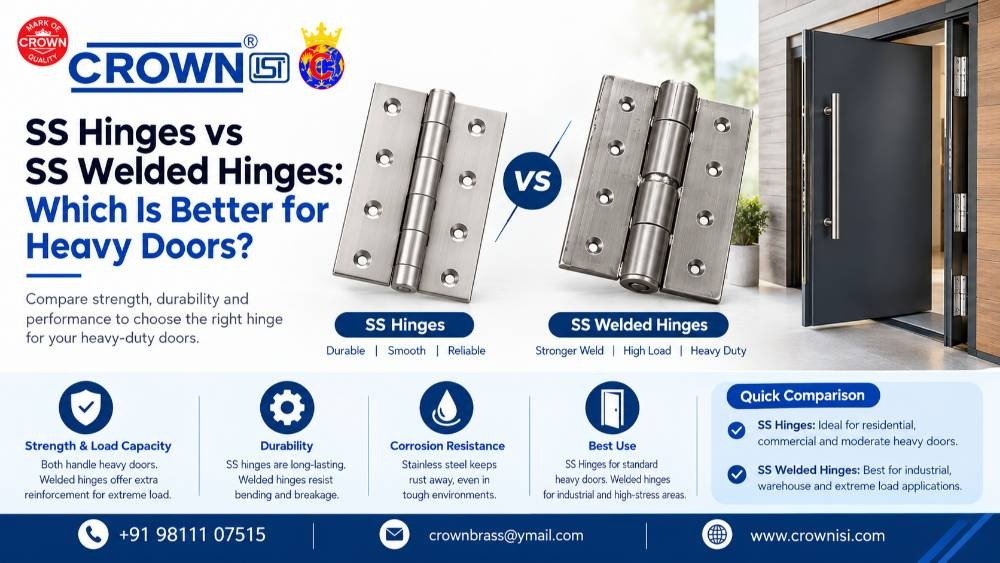
Crownisi is a trusted name in high-quality stainless steel hardware and accessories. Our product range includes door handles, locks, hinges, and other fittings made from both SS304 and SS316 stainless steel. By offering both grades, Crownisi ensures customers can select the right material for their needs – from standard indoor applications (using SS304) to tough outdoor or coastal conditions (SS316). All Crownisi stainless steel products meet stringent ISI/BIS quality standards, meaning you get reliable corrosion protection and durability. With decades of experience in the industry, Crownisi provides expert guidance and customization on material choice, so projects get the optimal grade of stainless steel. Whether you need economic SS304 for general use or premium SS316 for marine-grade performance, Crownisi has the expertise and inventory to deliver the right solution.
Conclusion
In summary, SS304 vs SS316 differ primarily by chemistry: SS316’s added molybdenum gives it superior corrosion resistance and somewhat higher strength, at a higher cost. SS304 is the economical, versatile choice for normal environments; SS316 is the upgrade for harsh or chloride-rich environments (marine, chemical, outdoor, medical, etc.). When deciding between them, consider the exposure conditions (salt, acids, outdoor humidity), mechanical demands, and budget. Always verify grade with supplier certifications. By understanding these differences – and by choosing from a quality supplier like Crownisi – you can ensure your stainless steel components perform reliably for years to come.
Frequently Asked Questions (FAQs)
Q: Why does 316 stainless steel cost more than 304?
A: SS316 contains extra alloying elements (especially molybdenum) that increase its corrosion resistance. These materials and the more complex manufacturing make SS316 significantly more expensive – often 1.5× to 2× the price of SS304.
Q: Can I tell SS304 and SS316 apart by appearance?
A: No – they look virtually identical when finished. The only reliable way is a material test report (MTR) or certification from the supplier. Some mills or manufacturers mark 316 parts with an etched “6” to differentiate, but without that you cannot visually distinguish them.
Q: Is SS304 “food safe”? Should I use SS316 for kitchen equipment?
A: Yes, SS304 is fully food-safe and is the most common grade used in kitchens, utensils, sinks, and food-processing equipment. SS316 is also food-safe and used when extra resistance to acids or salt (for example in commercial kitchens or dairy processing) is needed. For ordinary kitchen use, SS304 is usually sufficient.
Q: What is 18/8 stainless steel?
A: “18/8” is a common nickname for SS304, referring to its nominal composition of 18% chromium and 8% nickel. This balance gives SS304 its good corrosion resistance and formability.
Q: When should I use SS316L instead of SS316?
A: SS316L is the low-carbon version of SS316. It should be used when heavy welding is required or in extremely cold conditions, since the low carbon prevents carbide precipitation and offers slightly better corrosion resistance after welding. In marine or pharmaceutical applications, SS316L is often specified for the extra safety margin.
Q: For outdoor door hardware (hinges, handles), which grade is better?
A: In mild climates or indoor doors, SS304 hardware performs well. But for exterior doors near the sea or in industrial/polluted areas, SS316 is recommended. Crownisi offers both grades; for coastal use we advise SS316 to avoid rust over time.
Q: Are SS304 and SS316 magnetic?
A: In their annealed state, both 304 and 316 are essentially non-magnetic (austenitic). Slight magnetism can be induced by cold-working, but generally neither grade will strongly attract a magnet.